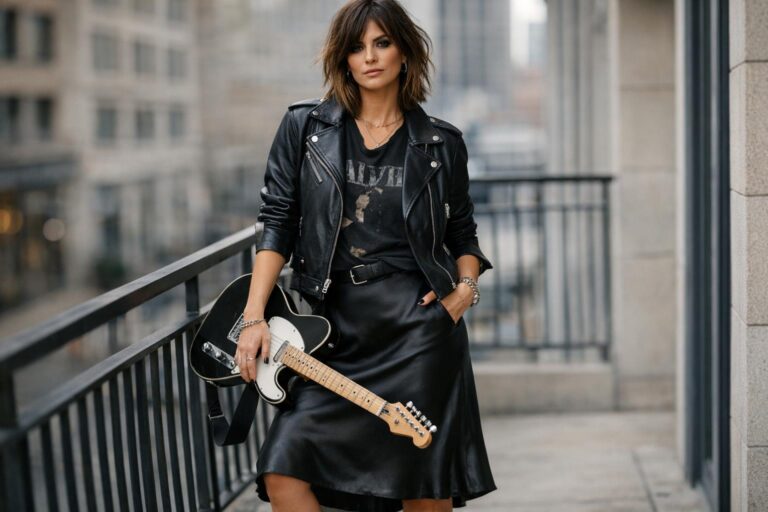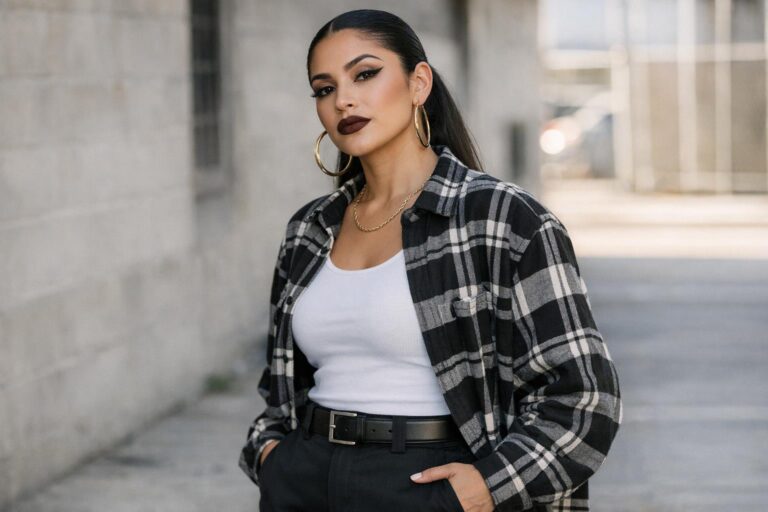
Modern Gangsta style: Engineered Streetwear that Stays Sharp
Gangsta style as outfit architecture, not costume
The quickest way to miss gangsta style is to treat it like a costume you “put on” for a photo. In real-world wear, it functions more like outfit architecture: strong proportions, controlled color, and repeatable formulas that hold up across a full day—walking, sitting, commuting, and moving through different spaces without the look collapsing. That’s why gangsta style continues to show up in modern streetwear conversations alongside terms like gangsta drip, trapstar style, and even more localized language like chicago drip. The common thread is intentional outfit composition—how the pieces stack, where the visual weight sits, and which details act as anchors.
This guide approaches the aesthetic with fashion-intelligence clarity: how to build thug outfits with structure, how to prevent “big statement” pieces from fighting each other, and how to scale the look from subtle to high-impact (including big drip outfit men styling) without drifting into parody. You’ll also see practical decision points—seasonal fabric behavior, comfort over long wear, and how to keep the palette clean so the silhouette reads sharp.
Define the core: what “gangsta style” communicates in a modern wardrobe
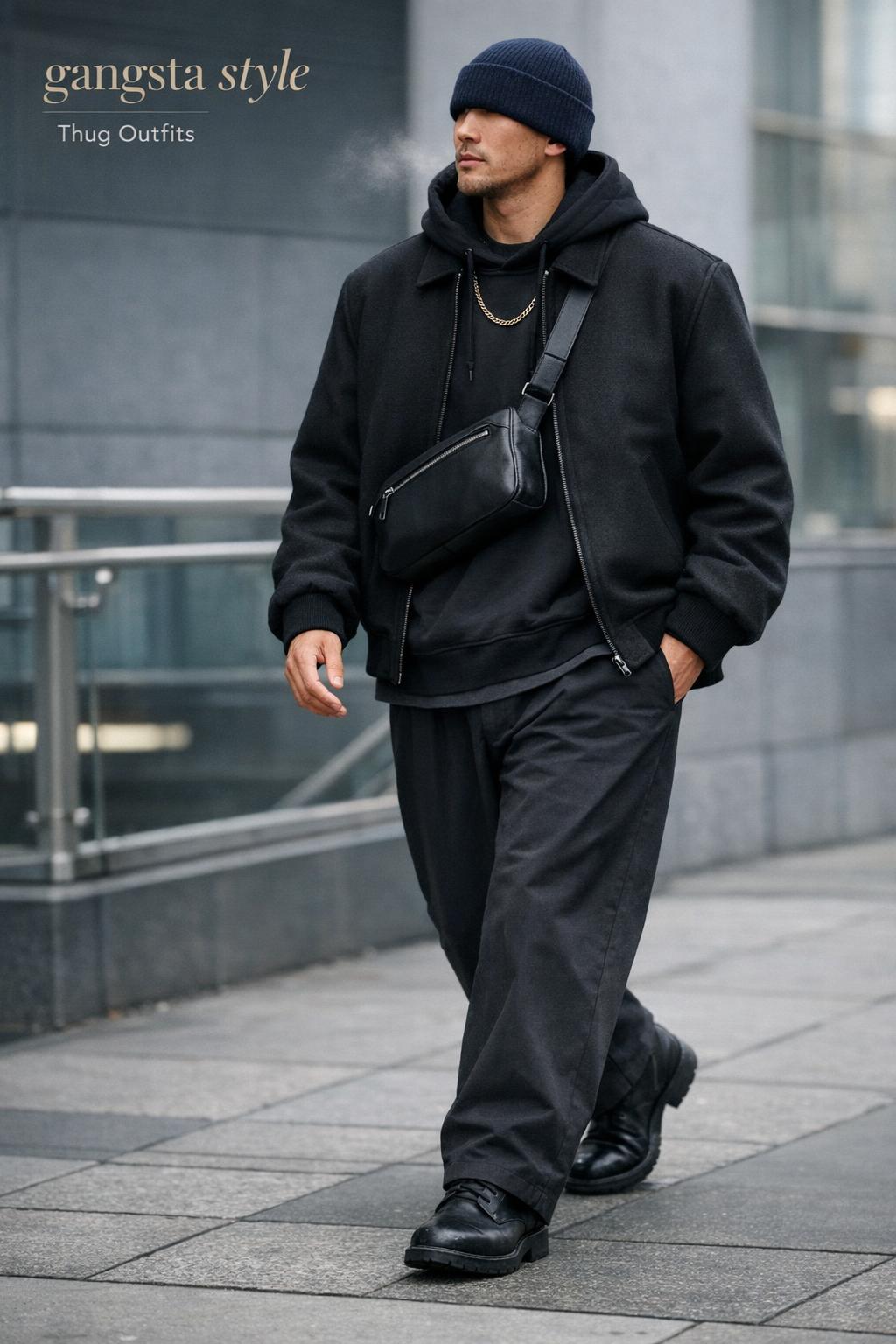
Gangsta style, in its most wearable form, is a styling language built around power silhouettes and visual certainty. It typically prioritizes a strong top line (jackets, hoodies, outer layers), grounded footwear, and accessories that signal intention. The look often reads “built,” not accidental: even relaxed fits feel engineered through proportion play—wider legs balanced by a structured layer above, or a clean monochrome base punctuated by one dominant statement piece.
Modern interpretations—especially those labeled gangsta drip or trapstar style—tend to sharpen the same principles using streetwear polish: coordinated sets, tonal layering, and precise fit control. Meanwhile, chicago drip often emphasizes weather-aware layering and heavier outerwear logic, because the same aesthetic needs to survive real climate and real movement.
The non-negotiables: silhouette, palette, and a visual anchor
Most successful gangsta style outfits hold three fundamentals at once: silhouette balance (where volume is placed), palette discipline (how many colors are truly working), and a visual anchor (the one element the eye returns to). The anchor can be outerwear, footwear, or an accessory—what matters is that it’s singular. When every piece tries to be the hero, the look reads chaotic instead of authoritative.
- Silhouette balance: if the bottom is wide, keep the top structured; if the top is oversized, keep the leg line cleaner.
- Palette discipline: commit to monochrome or near-monochrome, then add one controlled contrast.
- Visual anchor: choose one focal item (a jacket, a chain-like accessory, standout shoes) and let supporting pieces stay quiet.
Style breakdown: the building blocks that make thug outfits look intentional
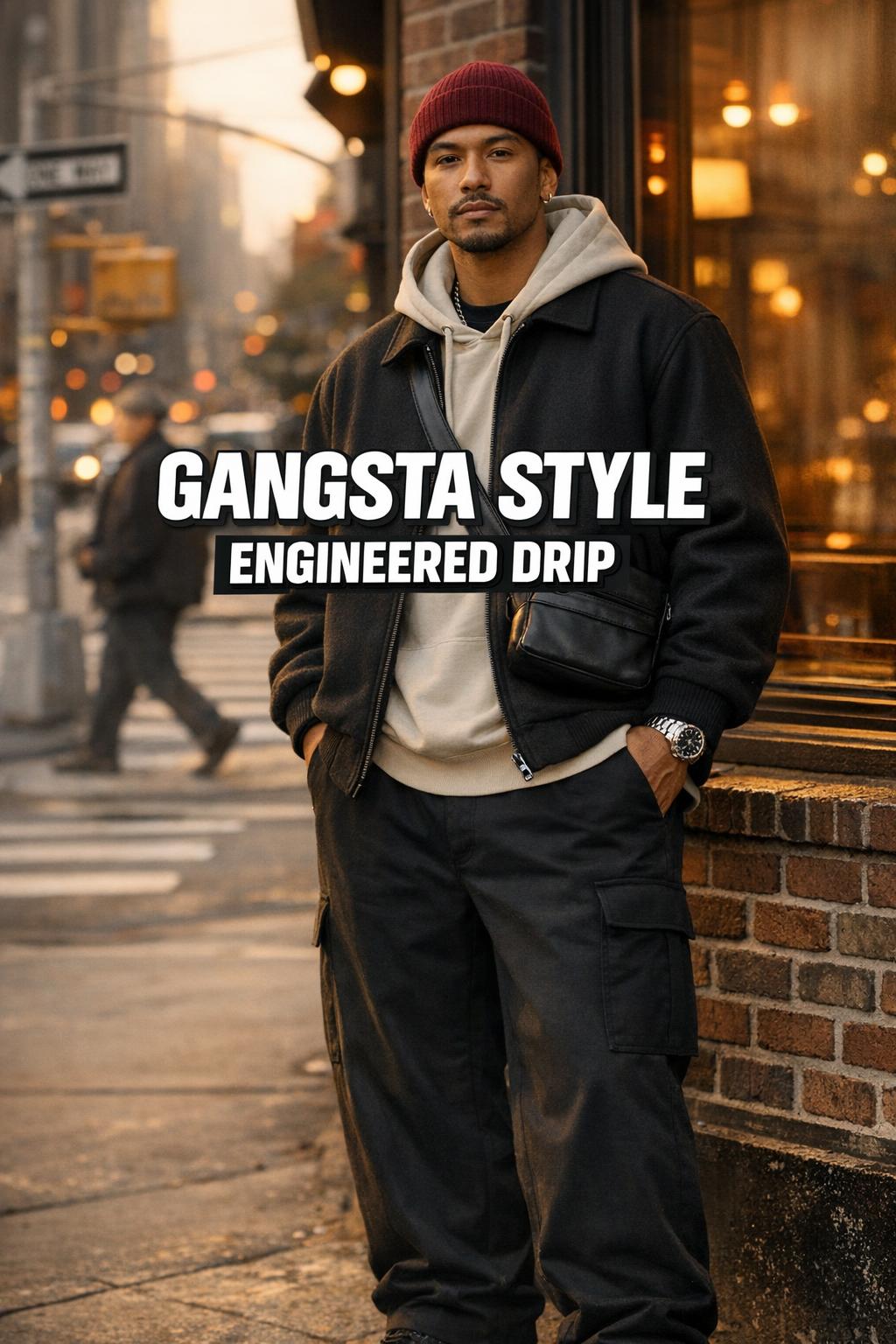
Thug outfits work when they’re built from reliable blocks rather than random trend pieces. Think in modules: base layer, mid layer, outer layer, footwear, and finishing details. Each module has a job. The base handles comfort and clean lines; the mid adds texture contrast; the outer layer sets the silhouette; the footwear grounds the outfit; the details control the “drip” factor without overwhelming the frame.
Base layer: clean lines, not distractions
A base layer in this style should read smooth and controlled. The goal isn’t loud branding; it’s a clean runway for the silhouette. Choose tees, tanks, or long-sleeves that sit flat and don’t twist during movement. In practice, that means paying attention to neckline stability and length—too short breaks the line; too long can look sloppy unless it’s intentionally layered.
Mid layer: texture contrast creates depth
Gangsta drip often looks “expensive” even when the pieces aren’t, because texture contrast creates depth. A smooth base with a heavier mid layer gives the outfit dimension. The mid layer is where tonal layering shines: keeping color close but changing texture so the look reads rich instead of flat.
Outer layer: where the silhouette is decided
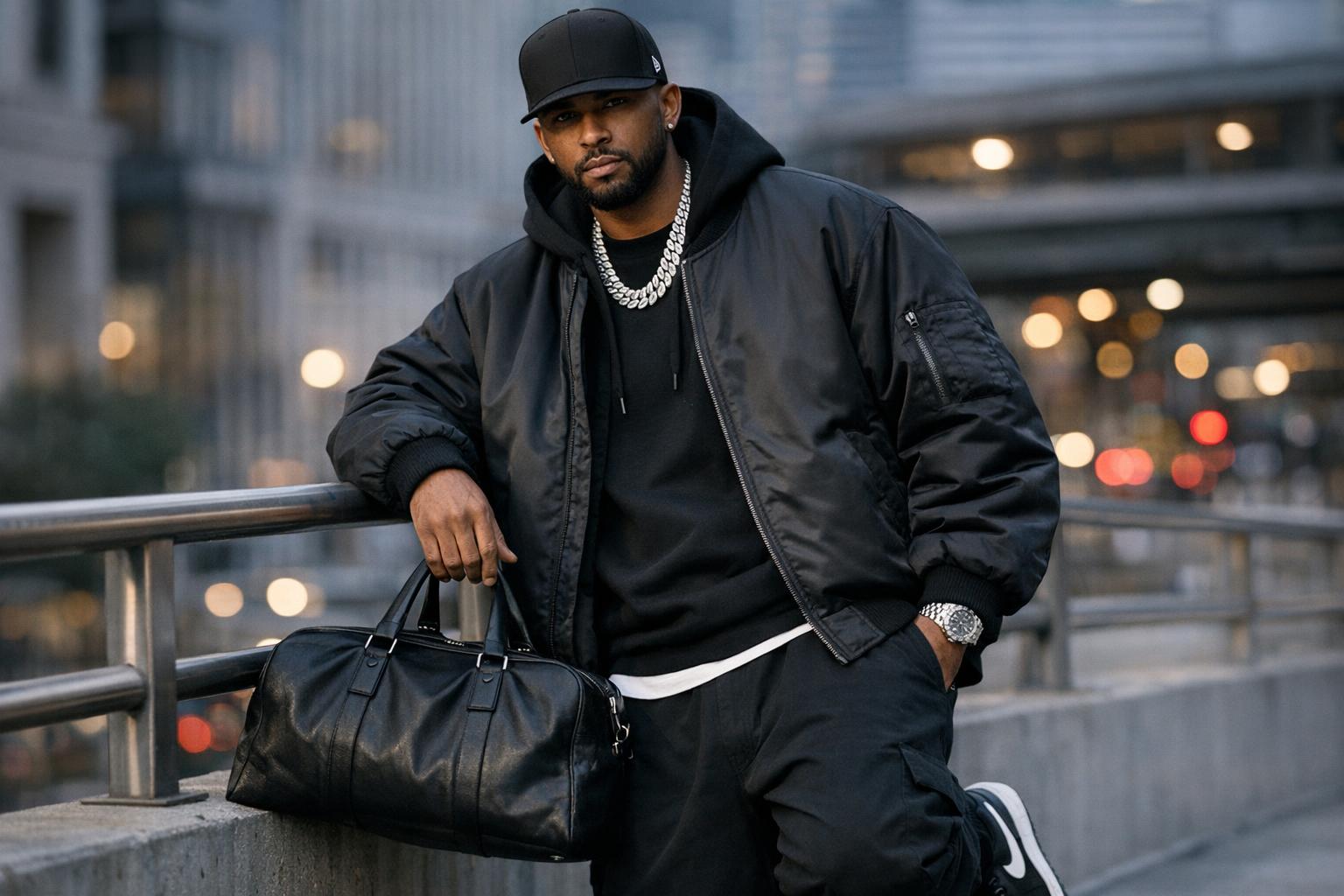
Outerwear is the clearest way to communicate gangsta style without over-accessorizing. A structured jacket sharpens posture; a heavier layer adds authority; a clean bomber shape can act as a visual anchor. For chicago drip, outerwear becomes even more central because the layer must function in wind and cold—so the silhouette is built to withstand the environment, not just the camera.
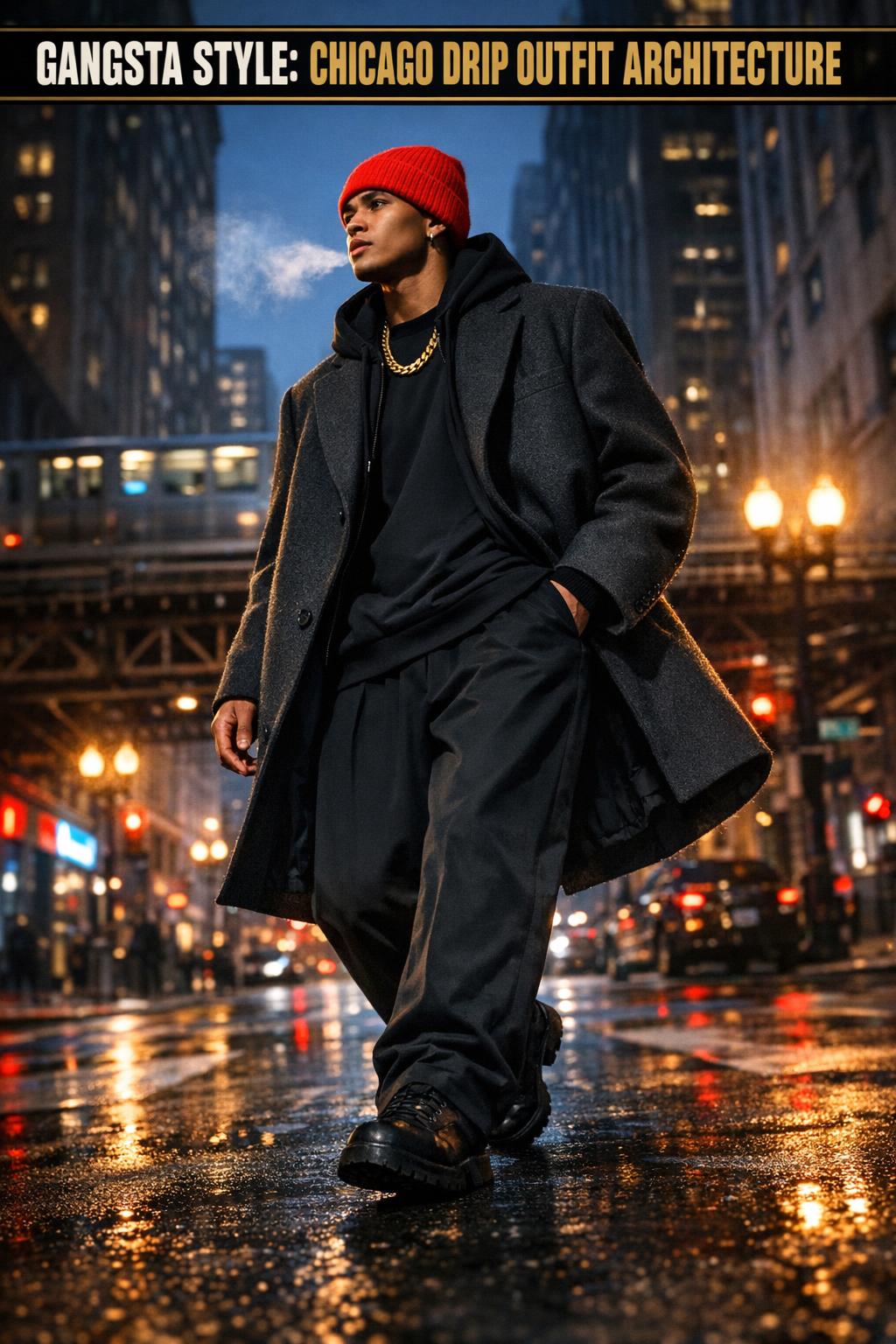
Gangsta drip vs. trapstar style: how to tell them apart through outfit logic
Gangsta drip is best understood as an outcome: the outfit reads polished, coordinated, and deliberate. Trapstar style, by comparison, reads like a specific streetwear lane within that outcome—more set-based, more branding-forward in feel, and often sharper in coordination. They overlap, but the styling logic differs.
Gangsta drip: the “controlled flex” formula
Gangsta drip leans on restraint: fewer competing elements, cleaner transitions between layers, and a focus on proportion. The outfit usually looks strongest when one dominant item carries the attitude and everything else supports it. This is why a near-monochrome set can read more powerful than a collage of loud graphics—because the eye reads control.
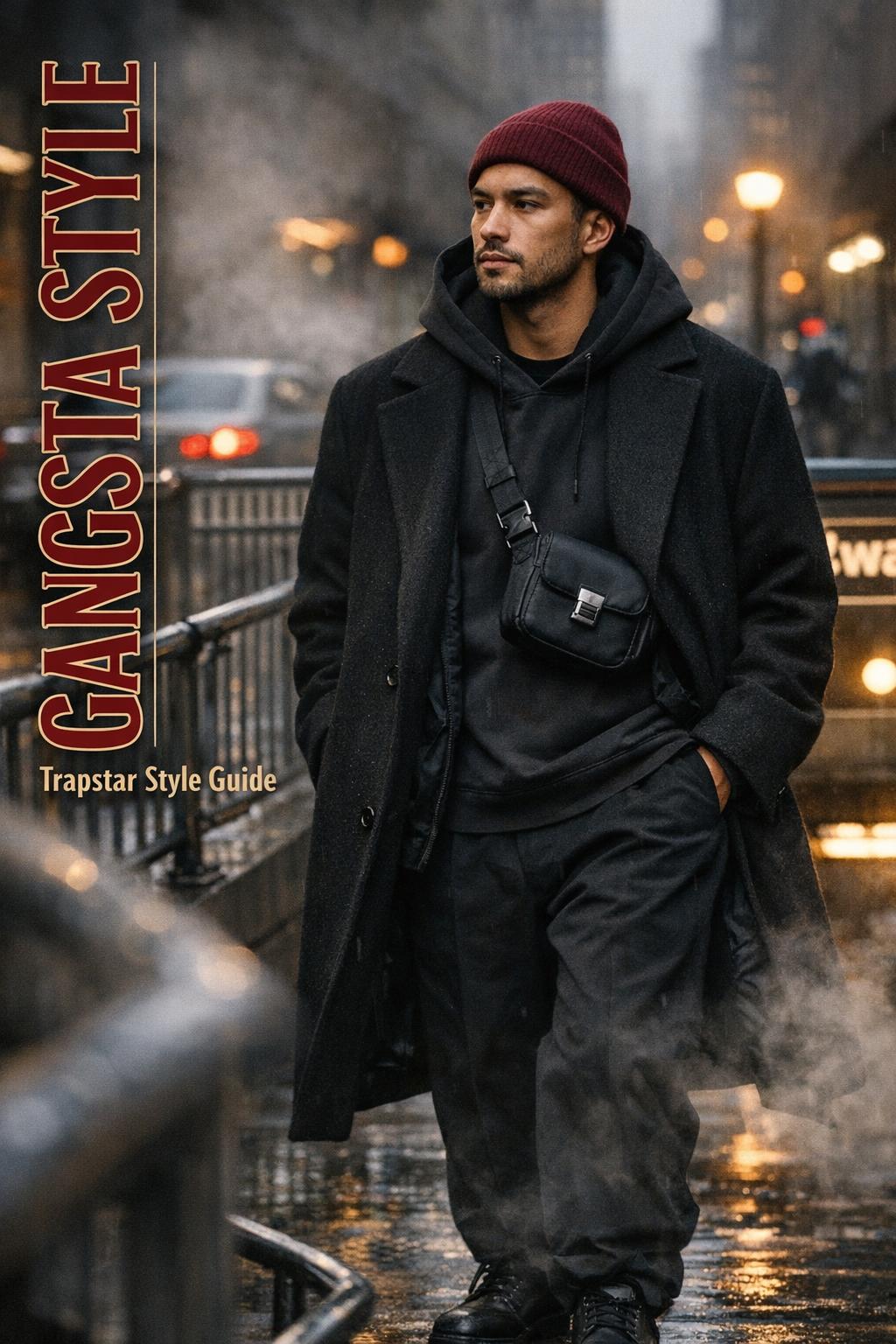
Trapstar style: coordinated streetwear energy
Trapstar style tends to favor cohesion through coordinated pieces and clear streetwear cues. The risk is overdoing it: if every layer screams, the fit loses hierarchy. The solution is to keep one layer clean—either the base or the outer layer—so the outfit keeps a clear visual ladder from top to bottom.
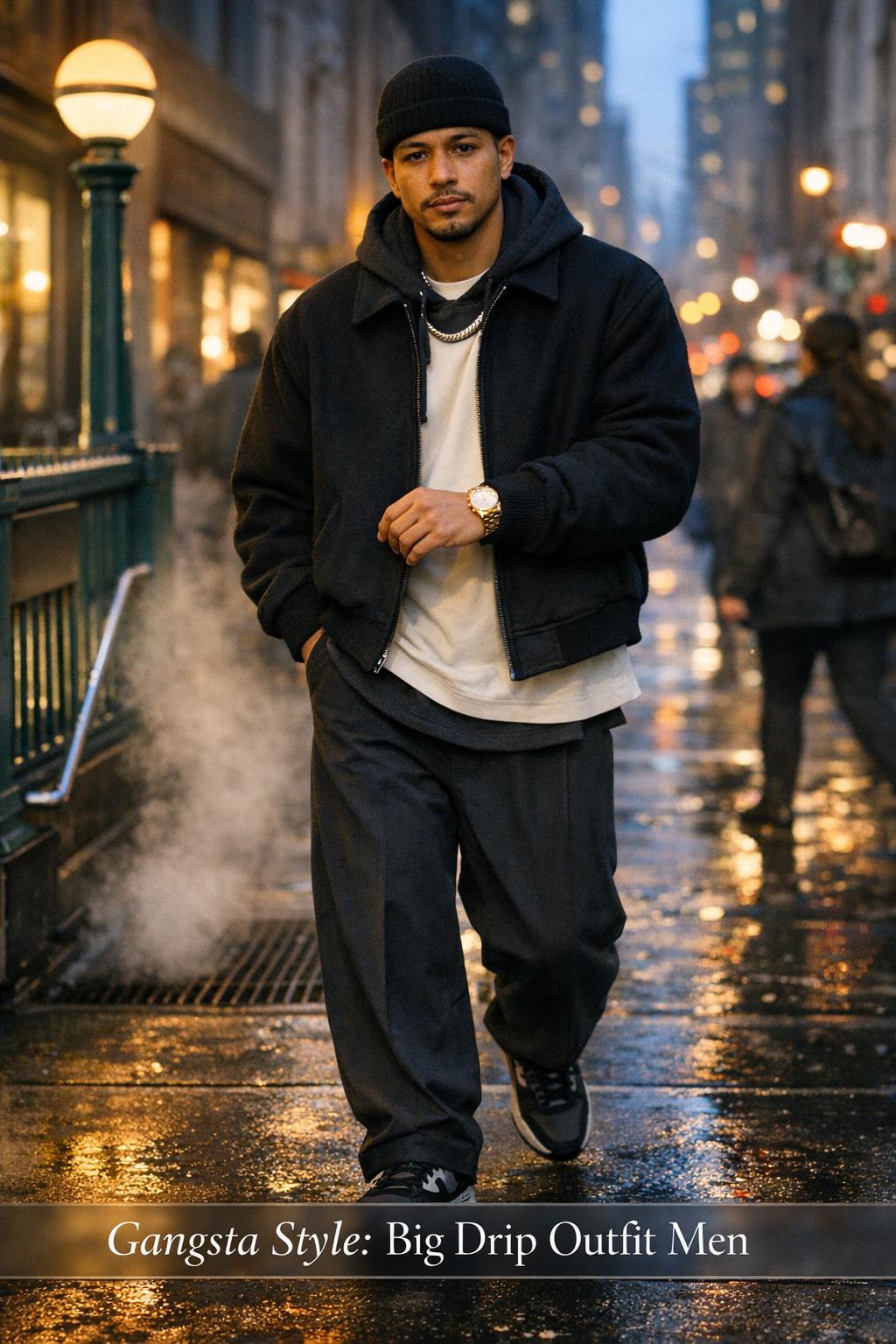
Chicago drip: location-informed layering that still reads sharp
Chicago drip is a useful framing because it forces a practical question: can the outfit survive weather, transit, and long hours without looking tired? In colder conditions, bulk is unavoidable, so the styling win comes from managing bulk with structure and repetition. Repeating one color across multiple layers makes the outfit read intentional even when the silhouette is heavy.
A strong approach is to keep the base and mid layer close in tone, then let the outer layer define the shape. This prevents the “puffy stack” effect where each layer visually fights. If you want high impact, introduce contrast through texture (matte vs. sheen) instead of adding multiple colors.
Tips: making cold-weather gangsta style feel composed
Cold-weather styling can look impressive in photos and still fail in real life if it restricts movement or overheats indoors. Prioritize layers that can be removed cleanly while preserving the outfit’s silhouette.
- Keep your base layer fitted enough to stand alone if you take off outerwear.
- Use tonal layering so the look remains cohesive when a layer comes off.
- Choose one “big” item (outerwear or boots) and keep everything else controlled.
Big drip outfit men: how to go bold without losing proportion
Big drip outfit men styling is not about adding more items; it’s about scaling one signal. The boldest outfits typically have a single oversized idea: a large outer layer, a strong set, or standout footwear. Everything else is edited. This is where proportion play becomes the deciding factor—too much volume everywhere reads shapeless, but volume in one zone reads powerful.
The one-statement rule
If the jacket is huge, the leg line should be cleaner. If the pants are wide, the top needs structure. If the footwear is the loudest element, keep the upper layers calm. This hierarchy is what makes the outfit feel designed rather than random.
Color strategy: monochrome first, contrast second
A monochrome base is the easiest way to carry “big” styling without chaos. Once you have that foundation, introduce contrast in a controlled way: a single bright accent, a single graphic, or a single texture shift. This keeps gangsta drip looking clean even at high intensity.
Outfit composition clinics: three repeatable formulas that read authentic
The goal with gangsta style is repeatability. You should be able to build variations from what you already own without the look turning into a one-time “theme.” These formulas are designed around function: sitting in a car, walking through the city, or moving between indoor and outdoor settings.
Formula A: the structured top + grounded bottom
This works because a structured top creates a strong shoulder line, while a grounded bottom keeps the outfit stable. The visual anchor sits up top, so you can keep the rest minimal. It’s especially effective for first-time thug outfits because it reads intentional without needing heavy accessories.
Formula B: tonal layering for gangsta drip polish
Tonal layering is the fastest path to “drip” that feels adult and composed. Keep the palette tight—think adjacent shades rather than high contrast. Then build depth with texture: a smooth base, a heavier mid layer, and a clean outer layer. The outfit looks more expensive because the eye reads complexity without noise.
Formula C: chicago drip layering with a removable outer layer
This formula prioritizes real movement and temperature swings. The base and mid layer must look complete on their own, so when the outer layer comes off indoors the silhouette still holds. The key is continuity: repeat a color or texture from the outer layer into the mid layer so the outfit doesn’t look like two different ideas.
When the look fails: common mistakes that make gangsta style read forced
Because gangsta style is visually assertive, small missteps get amplified. Most failures aren’t about “wrong pieces”; they’re about wrong relationships between pieces—volume competing with volume, too many focal points, or colors that don’t resolve into a clean story.
- Too many statement items: the outfit has no hierarchy, so nothing looks intentional.
- Unmanaged proportions: oversized top and oversized bottom without structure creates a collapsed silhouette.
- Over-contrasting palettes: multiple loud colors reduce the look’s authority and make it feel busy.
- Detail overload: too many accessories can shift the outfit from composed to costume.
- Ignoring wearability: stiff layers, overheating indoors, or restrictive fits make the look impractical and less confident.
Practical styling decisions: fabric behavior, movement, and all-day comfort
A style that relies on posture and presence has to function through motion. Fabric behavior matters: some materials hold shape, others collapse and wrinkle, changing the silhouette by midday. If you want gangsta drip to look consistent, you need pieces that maintain line integrity—especially in the shoulders, waist, and knee areas where garments tend to distort.
Movement is another reality check. Sitting compresses outerwear and can change how an outfit reads when you stand up again. If you’re building chicago drip for cold weather, make sure your layering doesn’t lock your arms or bunch at the waist. A strong outfit maintains its composition when you move, not only when you pose.
Tips: keeping the silhouette sharp over long wear
Small adjustments keep the look stable for hours and prevent the “outfit drift” that happens after commuting, eating, or spending time indoors.
- Choose layers that slide over each other smoothly to reduce bunching.
- Prioritize a clean shoulder line; it’s the fastest way to restore structure after movement.
- Use one anchor piece that stays consistent all day (outerwear, footwear, or a signature accessory).
Scaling the aesthetic: from subtle gangsta style to full gangsta drip
The most useful way to approach gangsta style is as a dial, not a switch. You can turn it up or down based on setting, weather, and how much attention you want the outfit to carry. This is also how you keep the style versatile: one wardrobe can support subtle looks and big drip outfit men moments by changing only one or two variables.
Low-key mode: clean palette, one strong proportion
In low-key mode, the outfit reads confident because it’s edited. Keep colors tight, let one proportion choice lead (a stronger jacket shape or a wider leg), and minimize extra details. This approach works in daily life because it’s comfortable and doesn’t feel like performance.
High-impact mode: amplify one signal, keep the rest quiet
For full gangsta drip, amplify one signal—bigger outerwear, stronger set coordination, or a standout accessory—then maintain discipline everywhere else. The “quiet” pieces are not afterthoughts; they’re what makes the focal point look deliberate.
Situational styling: where each version of the look performs best
Gangsta style shifts depending on context because the same silhouette can read different in different environments. A high-contrast outfit can look sharp at night but too aggressive for daytime. A heavy layered look can be perfect outdoors but exhausting indoors. Treat context as part of the outfit design.
Daytime city wear
Daytime styling benefits from clarity: clean palette, strong shoes, and a jacket that holds shape. This is where thug outfits feel most authentic when they prioritize wearability—pockets that work, layers that breathe, and proportions that look good while walking rather than just standing.
Night settings and high-contrast lighting
At night, texture contrast reads more than subtle color shifts. If you want gangsta drip to pop under low light, prioritize differences in finish—matte versus sheen, smooth versus heavy. Keep the silhouette simple so the outfit reads clearly from a distance.
Cold-weather transit (the chicago drip test)
Cold-weather transit is the ultimate stress test: walking outside, entering heated spaces, sitting, standing, and repeating. Chicago drip logic wins here because it’s built on functional layering and a composed silhouette even with bulk. If your outfit only works when you’re outdoors, it’s not fully designed.
Fine-tuning details: finishing choices that elevate without overloading
Details are where gangsta style can either become iconic or become noisy. The cleanest approach is to choose details that reinforce the outfit’s main idea—echoing the palette, repeating a shape, or adding one precise highlight that pulls the eye. If you’re building trapstar style energy, details should still respect hierarchy: one focal accessory, not five competing ones.
For big drip outfit men styling, keep the “drip” concentrated. One strong visual anchor reads more premium than a spread of small signals. This is also the easiest way to keep thug outfits wearable in real life—less to manage, less to adjust, and less that can feel uncomfortable over a long day.
Tips: a quick self-check before you leave
Use a short checklist to confirm the outfit reads intentional from multiple angles and remains comfortable.
- Is there one clear focal point, or do multiple pieces compete?
- Does the silhouette hold when you sit and stand?
- Does your palette resolve into a cohesive story within two to three tones?
- Can you remove one layer without the outfit falling apart?
FAQ
What is gangsta style in fashion terms?
Gangsta style is a styling approach built around strong silhouette control, palette discipline, and a clear visual anchor, creating an outfit that reads confident and intentional rather than random or overly trend-driven.
How do I get gangsta drip without overdoing it?
Start with a near-monochrome base, choose one statement element (outerwear, footwear, or a standout accessory), and keep the rest of the outfit quiet so the focal point has clear hierarchy.
What’s the difference between gangsta drip and trapstar style?
Gangsta drip describes a polished, controlled outcome—cohesive layers and intentional proportions—while trapstar style leans into coordinated streetwear energy; both work best when one layer stays clean to prevent visual overload.
How do I build chicago drip in a practical way?
Use functional layering with tonal repetition, let outerwear define the silhouette, and make sure the base and mid layer look complete on their own so the outfit stays sharp when you move indoors.
What makes thug outfits look intentional instead of costume-like?
Intentional thug outfits have a clear structure: a stable base layer, controlled proportion play, a limited color story, and one dominant anchor piece rather than multiple competing statement items.
How can big drip outfit men styling still look balanced?
Scale only one idea—big outerwear, wider pants, or standout shoes—then keep the remaining pieces streamlined, letting the silhouette stay designed rather than shapeless.
What are the most common proportion mistakes in gangsta style?
The most common mistakes are oversized top plus oversized bottom without structure, too many focal points, and high-contrast colors layered together with no tonal “bridge” to unify the outfit.
How do I keep the look comfortable for a full day?
Choose layers that move smoothly without bunching, prioritize a stable shoulder line, and build the outfit so it still works when you remove a layer—especially important for chicago drip where temperature changes are constant.