Lived-In Edge: A Wearable Grunge Moodboard for City Days
Grunge moodboard: the aesthetic that turns “messy” into intentional
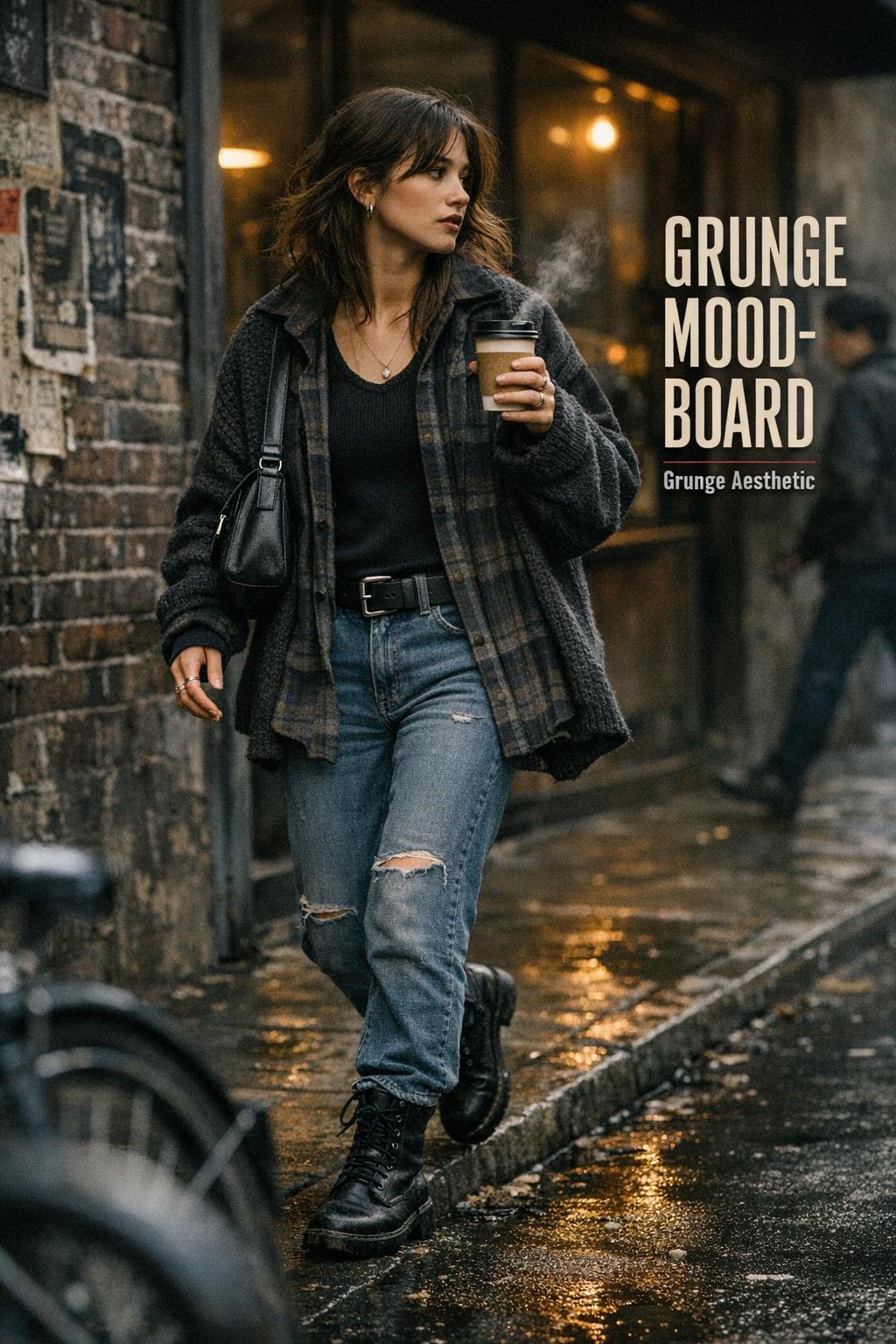
The grunge moodboard lives in the tension between comfort and edge: a look that feels lived-in, slightly undone, and visually grounded by texture. It’s not about looking “perfect.” It’s about building an outfit composition that reads authentic—where worn denim, soft knits, heavy footwear, and muted tones create a cohesive identity instead of a costume.
As a grunge moodboard aesthetic, it translates easily to real life because it’s fundamentally practical. The silhouette strategy favors movement—roomy layers, relaxed proportions, and pieces that can take a day of walking, commuting, or long hours without requiring constant adjustment. That’s why the same visual language shows up everywhere the outfit needs to do more than just pose: city streets, concerts, casual offices with flexible dress codes, coffee runs, and weekend errands where you still want your look to carry an attitude.
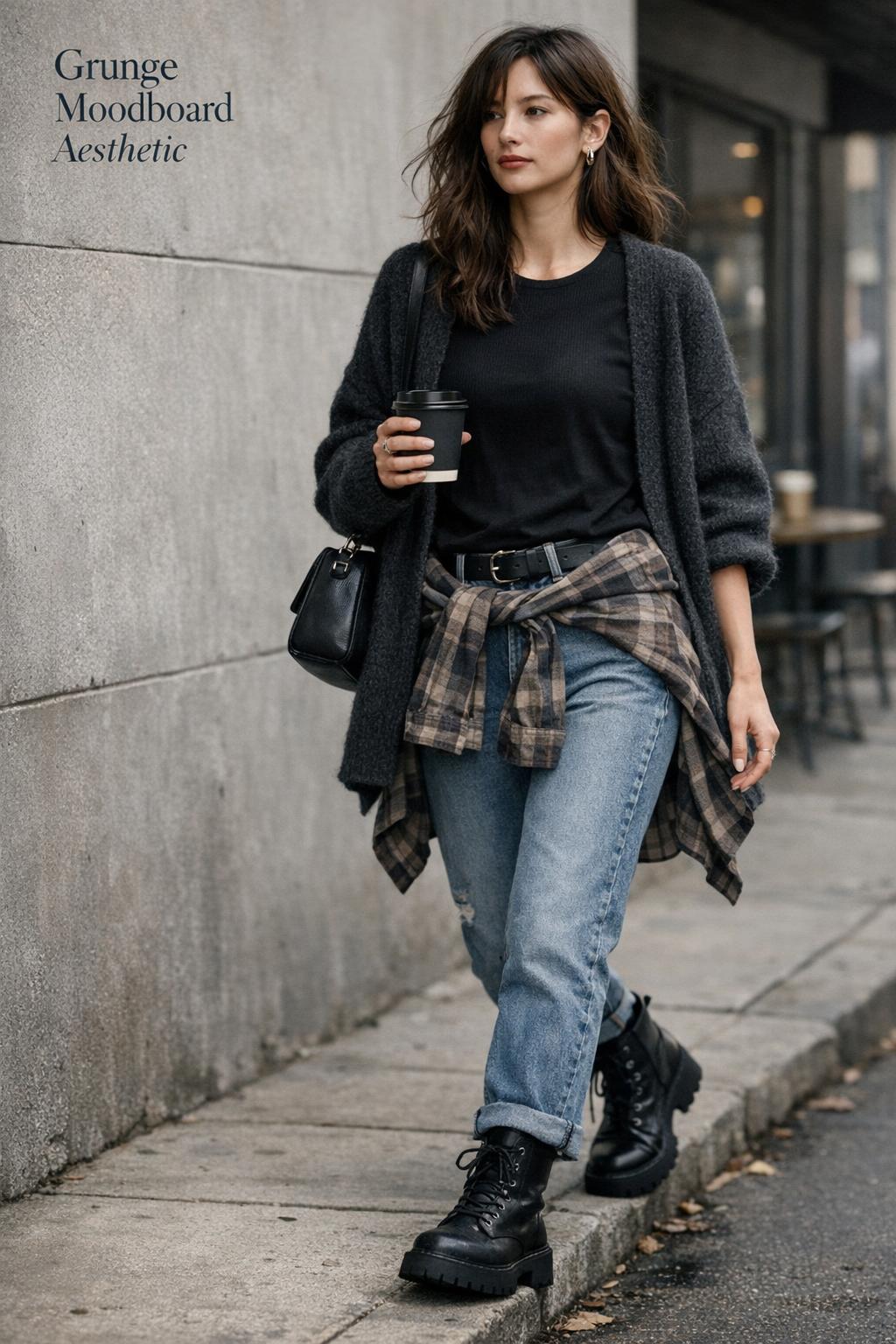
The appeal is clarity. Grunge is a style filter: it reduces your wardrobe to a few strong elements—texture contrast, tonal layering, and a deliberate roughness—then lets you remix them. Whether you label it grunge aesthetic, grunge mood board aesthetic, rock moodboard, or even the commonly confused “grudge aesthetics,” the strongest versions are the ones that look curated, not chaotic.
Build the visual identity first: what makes a grunge moodboard read as grunge
A grunge moodboard works when you treat the outfit like a visual system. The system is built from three anchors: (1) a muted, earthy, or washed palette, (2) tactile fabrics that show depth (knit, denim, leather-like finishes, worn cotton), and (3) weight—either literal weight (boots, outerwear) or visual weight (dark tones, chunky shapes). When those anchors are present, you can flex the look from minimal to dramatic without losing the identity.
Found the dress? Keep the rest in one place.
Zarellea brings guest details, vendors, timelines, and every next step together — so your wedding plan feels as good as your look.
Think in terms of silhouette balance. If the top half is oversized—slouchy sweater, roomy flannel-style layer, boxy jacket—let the bottom half either follow with relaxed denim or sharpen the proportions with a slimmer skirt or fitted leg. If the bottom half is wide and heavy, keep the top clean so the outfit doesn’t collapse into bulk.
- Palette logic: blacks, charcoal, ash gray, washed denim blues, muted browns, and off-whites create a cohesive base that makes mixing easy.
- Texture contrast: combine at least two different surface types (soft knit + rigid denim, matte cotton + glossy hardware, smooth tee + distressed layer).
- Visual anchors: boots, belts, metal details, or a single dark outer layer keep the eye grounded.
This is where the “moodboard” mindset matters. You’re not collecting random grunge items—you’re composing a visual story that stays consistent from head to toe.
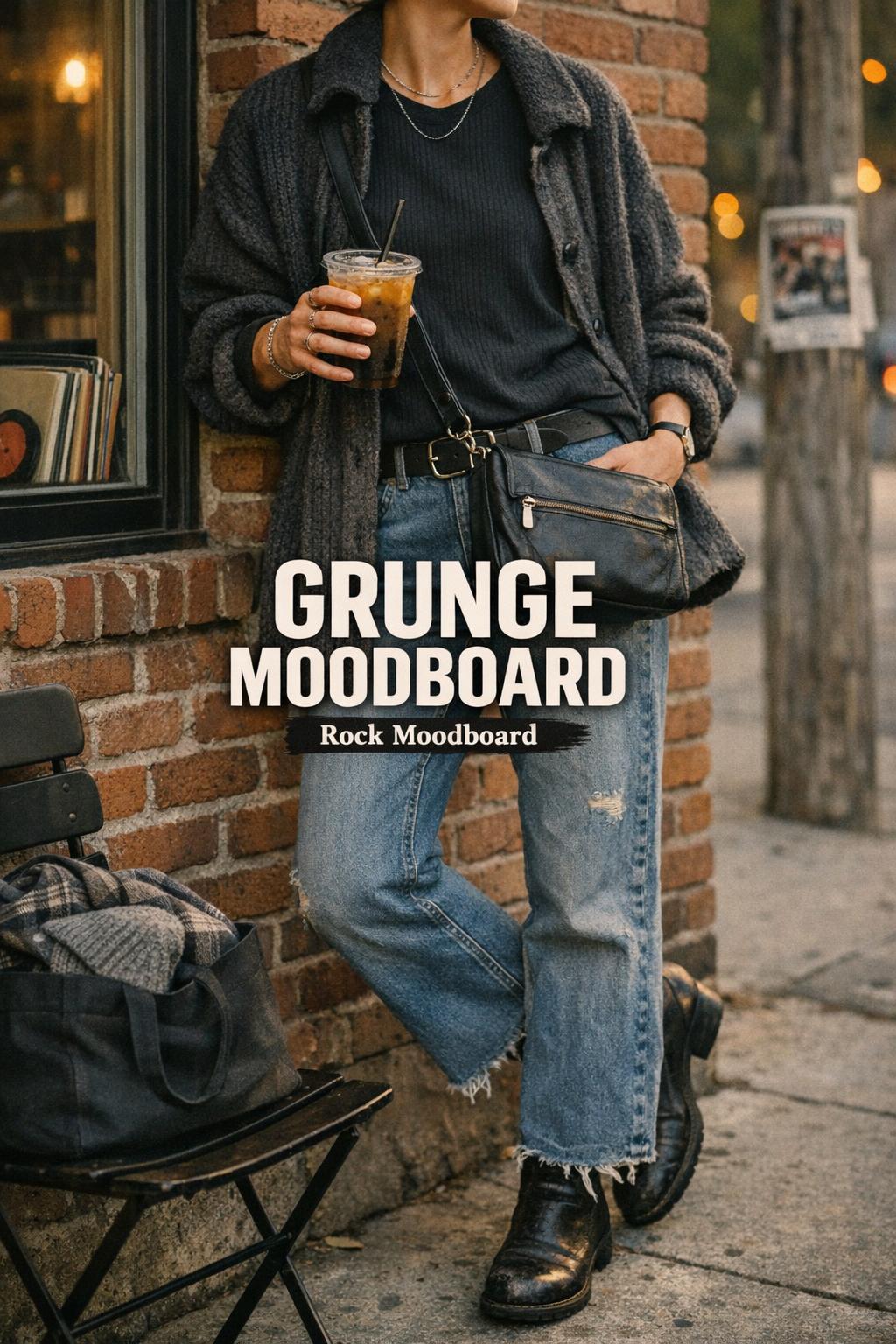
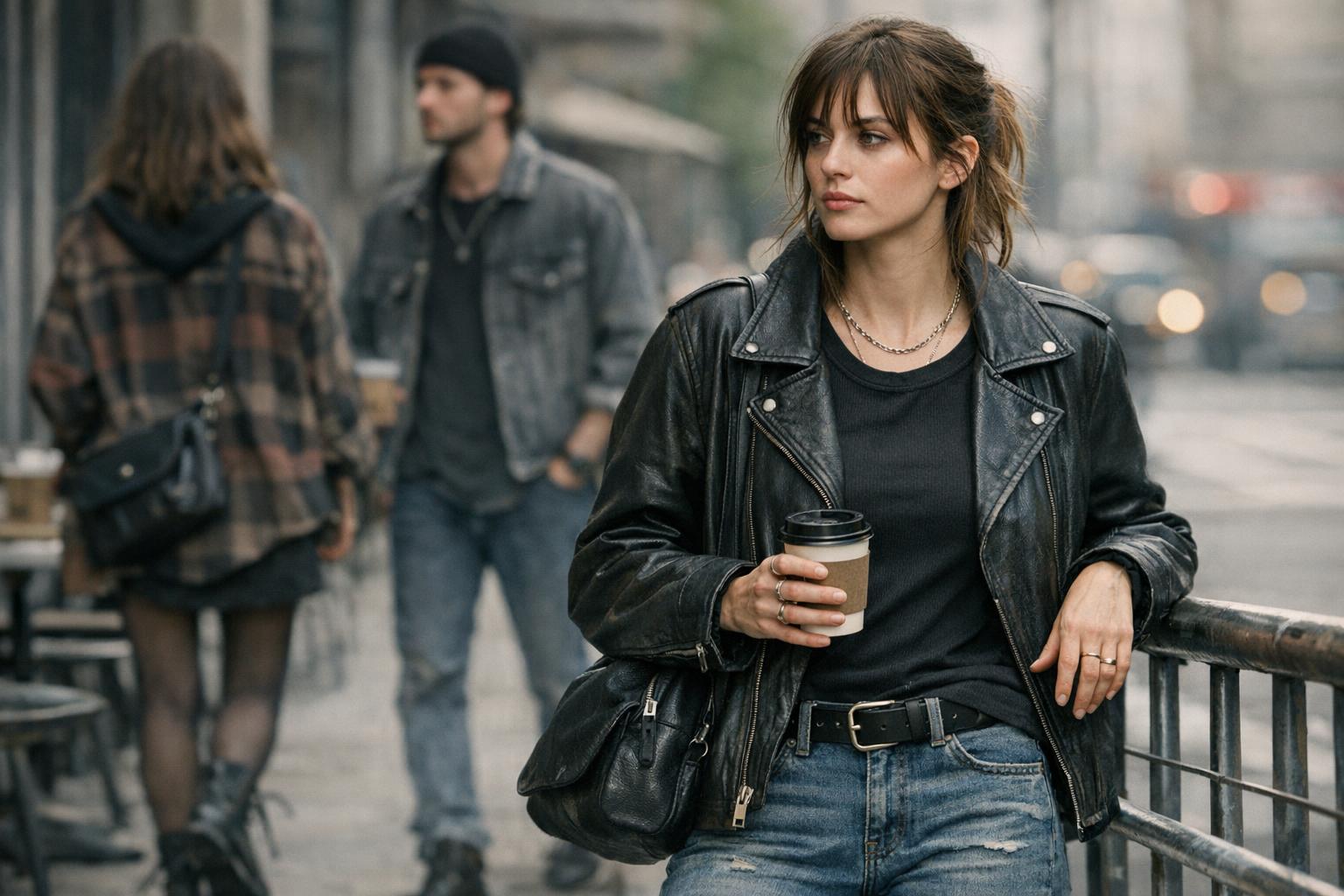
Look: worn-in denim with a sharp black anchor
This look is the cleanest entry point into the grunge moodboard aesthetic: casual, grounded, and instantly readable. The silhouette relies on a familiar base—denim and a simple top—then introduces a dark anchor to give the outfit its edge. It’s grunge without theatricality, which makes it easy to wear on repeat.
Start with washed denim (straight-leg or relaxed) and a matte black top that sits close enough to the body to keep proportions controlled. Add a heavier outer layer—black jacket or dark overshirt—so the outfit has structure and visual weight. Keep colors in the muted family: charcoal, faded blue, and black create tonal layering without looking overly styled.
- Key garments: washed denim, black tee or fitted long sleeve, dark outer layer
- Footwear: black boots (chunkier soles read more “rock moodboard”)
- Accessories: belt hardware, minimal silver-toned details, dark bag
Why it works: the denim carries the “lived-in” message, while black provides the visual authority. The outfit looks intentional because the palette is disciplined, and the contrast is controlled—washed texture against clean darkness.
Look: oversized knit and heavy footwear for soft-grunge contrast
Soft grunge is where comfort becomes the statement. The mood is slightly moody, slightly cozy—less “stage” and more “real life.” The silhouette should feel slouchy on top with a grounded base at the bottom so the outfit doesn’t drift into sleepwear.
Use an oversized knit sweater as the main texture. Pair it with darker bottoms—black denim, charcoal skirt with tights, or a muted neutral trouser—so the knit reads as intentional volume. Heavy footwear is essential here: boots create the visual anchor that turns softness into grunge moodboard aesthetic rather than just cozy dressing.
Styling insight: keep the knit’s neckline and sleeves slightly undone, but control the outfit with one “clean line”—a sleek bag, a structured belt, or a neat hair silhouette. That single polished element prevents the look from becoming messy, which is the biggest difference between grunge aesthetic and simply looking unstyled.
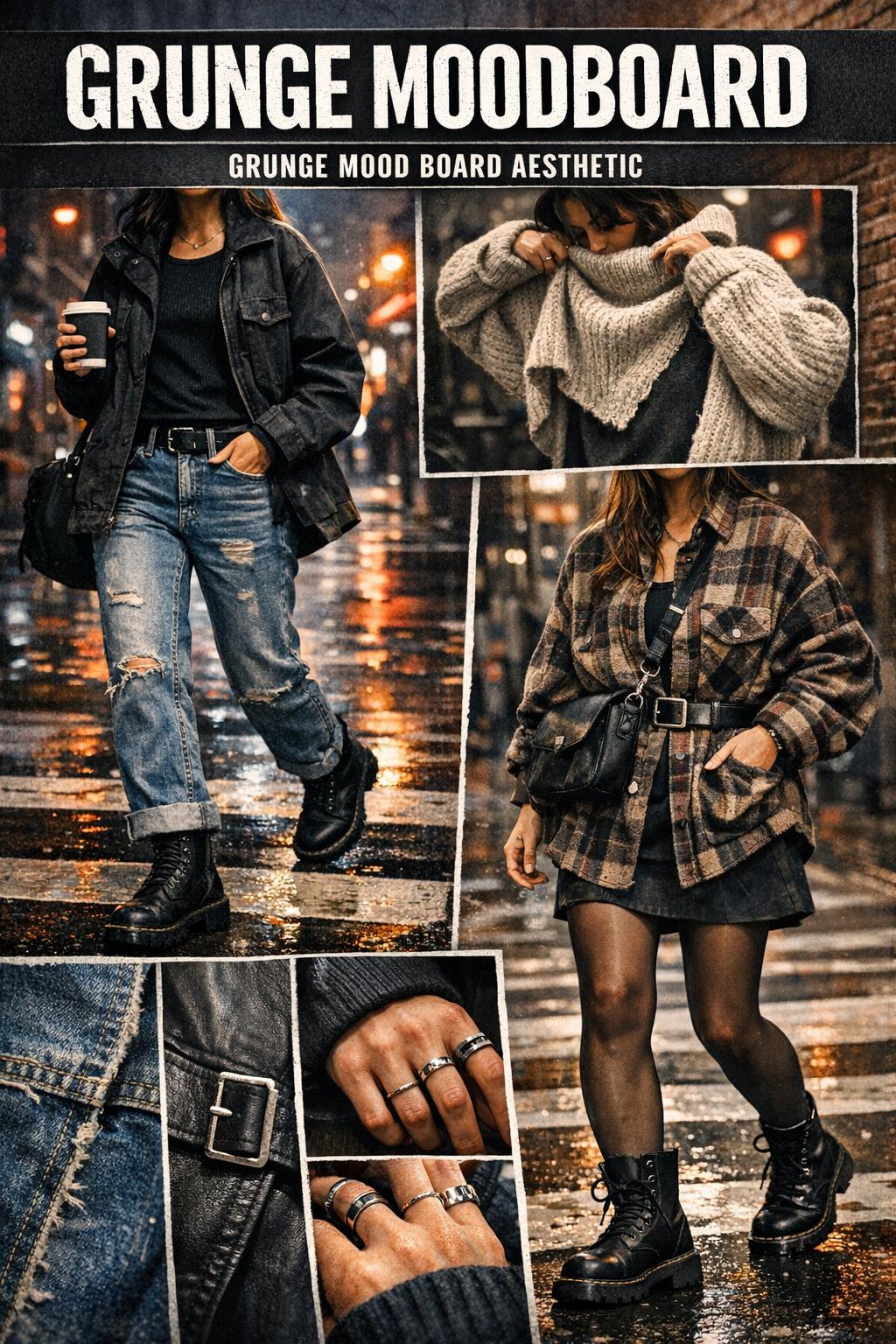
Style tip: make texture do the work (not extra pieces)
When the outfit already has strong texture—chunky knit, distressed denim, substantial boots—avoid stacking too many additional elements. The grunge mood board aesthetic reads strongest when each piece has a role: one hero texture, one neutral base, one visual anchor. Add more than that and the look can tip from composed into cluttered.
Look: tonal black layers for a cleaner grunge moodboard aesthetic
This is grunge for minimalists: all-black or near-black, built on tonal layering rather than loud contrast. The mood is sleek, urban, and controlled—more gallery-night than garage-band, but still rooted in the same grunge aesthetic framework of weight, texture, and a slightly raw finish.
Keep the base dark: black jeans or a black skirt, plus a black top in a different fabric finish (ribbed knit, soft cotton, or a subtly sheer layer). Add a second layer—dark outerwear or an overshirt—so the outfit has depth. The key is fabric differentiation: matte with a slightly shinier finish, smooth with ribbed, or rigid with soft.
- Key garments: black base layer, black bottom, black outer layer with a different texture
- Footwear: black boots (sleeker toe for a sharper, cleaner vibe)
- Accessories: minimal metal hardware, understated belt, compact bag
Why it works: tonal dressing automatically reads cohesive. In a grunge moodboard context, cohesion is what makes the “undone” elements look deliberate. The look stays grounded, flexible, and wearable across settings where a more chaotic rock moodboard might feel too costume-like.
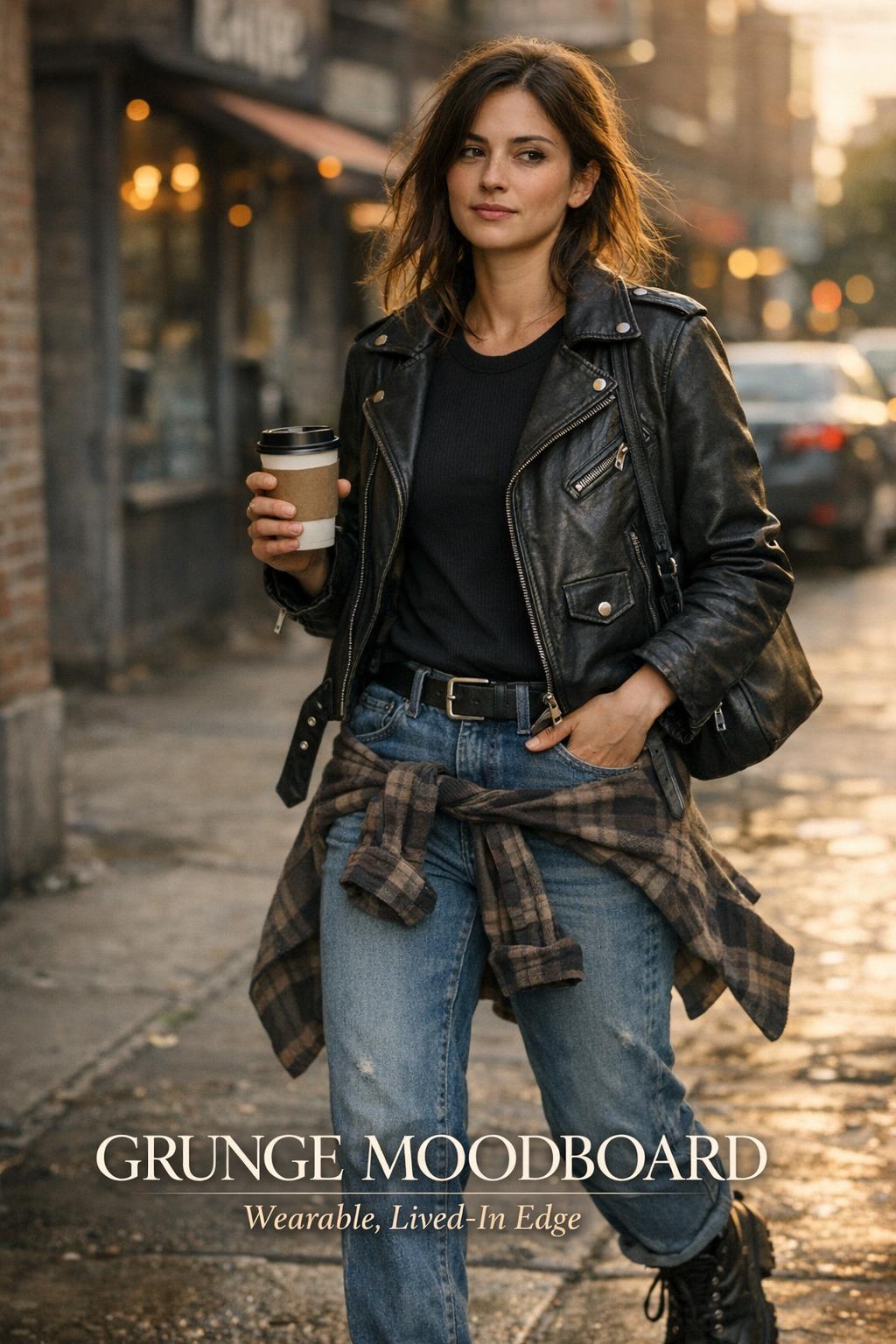
Look: plaid-style layering with denim for a classic rock moodboard signal
If you want your grunge moodboard to be instantly legible, layered plaid-style shirting (or an overshirt with a similar visual rhythm) is a direct signal. This look leans more “rock moodboard” in energy—casual, rebellious, and slightly nostalgic—while staying practical for day-to-day wear.
Use a simple base: a neutral tee and denim. The plaid-style layer acts as the mid-layer that brings pattern and texture without forcing bright color. Keep the palette washed and grounded—think muted reds, deep greens, charcoal, and black rather than high-saturation tones. Finish with boots to reinforce the weight and keep the silhouette stable.
Styling insight: leave the overshirt open to preserve movement and a relaxed line. If the outfit feels too loose, tighten the composition with one fitted element—slimmer denim, a more fitted top, or a belt that creates waist definition. Grunge is relaxed, but the best grunge mood board aesthetic still respects proportion play.
How to recreate the grunge moodboard without buying a new wardrobe
The easiest way to build a grunge moodboard aesthetic is to reframe basics through texture and weight. Look for what you already own that has softness (knits), rigidity (denim), darkness (black layers), and “wear” (washed finishes). Then edit your combinations so they feel cohesive—fewer colors, stronger anchors, and clearer silhouette intention.
- Start with a neutral base: black top + washed denim or charcoal bottoms.
- Add one heavy layer: dark jacket, overshirt, or substantial knit.
- Choose grounded footwear: boots are the simplest way to make the outfit read grunge.
- Limit accents: one belt, one metal detail, one bag—keep the focus on the outfit’s textures.
Trade-off to know: if you remove too much texture, you risk drifting into plain minimalism. If you add too much pattern or too many layers, you risk losing clarity. A strong grunge aesthetic sits in the middle—pared down, but tactile.
Look: skirt-and-boot grunge that keeps the silhouette sharp
This version uses contrast in structure rather than color. The mood is tougher and more styled, but still anchored in the grunge moodboard language: weight on the feet, darker tones, and a mix of soft and structured fabrics. It’s a strong option when you want grunge energy without relying on oversized layers.
Choose a dark skirt—black or charcoal—and balance it with a fitted or lightly relaxed top. Add a layer that introduces texture: a knit, a darker overshirt, or a jacket with a more rigid line. Boots do the heavy lifting here, creating a visual anchor that makes the skirt feel grounded rather than delicate.
Why it works: the skirt keeps the silhouette clean, while the boots and dark layering pull the look back into grunge. This is one of the most effective “street-to-night” interpretations of the grunge mood board aesthetic because the structure reads intentional in more settings.
Look: relaxed neutrals with a grunge edge (for everyday wearability)
Not every grunge moodboard has to be black-heavy. A muted neutral palette—off-white, beige, taupe, and charcoal—can still read grunge when the textures and anchors are right. The mood becomes quieter, more modern, and slightly softer, while keeping that grounded, worn-in attitude.
Use a neutral top with visible texture (ribbed knit, heavy cotton) and pair it with darker, washed bottoms so the outfit stays anchored. Add a darker outer layer or boots to prevent the palette from floating. This is also where subtle distressing or a faded finish matters: it gives neutrals the “lived” quality that connects them to grunge aesthetic rather than clean minimal styling.
Styling insight: when working with light neutrals, keep the silhouette slightly slouchy—relaxed sleeves, roomier denim—so the look doesn’t become preppy. The grunge moodboard aesthetic needs ease in the line to maintain its identity.
Common mistakes that weaken the grunge moodboard aesthetic
Grunge is often misread as “throw anything on.” In practice, the most convincing grunge moodboard looks are edited. They have a clear palette, a controlled proportion strategy, and at least one grounding element. When any of those are missing, the outfit can look accidental rather than aesthetic.
- Too many statement pieces: if everything is loud, nothing becomes the visual anchor.
- No weight in the outfit: lightweight shoes and thin layers can make the look read unfinished instead of grunge.
- Clashing palettes: bright, unrelated colors break the moodboard cohesion unless intentionally controlled.
- Over-layering without silhouette control: bulk without structure can look sloppy rather than styled.
- Confusing “grudge aesthetics” with grunge aesthetic: the goal is curated roughness, not unkempt dressing.
The fix is simple: reduce the palette, choose one hero texture, and add one piece that carries visual authority—most often boots or a darker outer layer.
Where the grunge moodboard works best (and how to adjust it)
A grunge moodboard is most useful in settings where you want personality without fragility. It’s a strong formula for long days because the silhouettes are forgiving and the fabrics are typically durable. For city errands, commuting, and casual social plans, the look reads effortless while staying functional.
For a concert or night setting, shift the balance toward darker tones and stronger anchors: more black, more contrast, heavier footwear, and slightly sharper lines. For daytime or casual office environments, keep the same grunge moodboard aesthetic but reduce visual noise: tonal layers, minimal hardware, and cleaner fabric finishes. The identity stays intact, but the styling becomes context-aware.
Key pieces that carry the grunge aesthetic across seasons
The grunge moodboard is adaptable because it’s built from layers. The same outfit logic works across temperature swings: keep a consistent palette, then adjust fabric weight. In warmer weather, reduce layers but keep the anchor—boots or a darker piece that holds the look down. In colder weather, lean into knits and heavier outerwear to amplify texture contrast.
- washed denim in a relaxed or straight silhouette
- black tops in varied textures (cotton, rib, knit)
- an overshirt or dark layer for depth
- boots that provide visual weight
- simple belts and minimal metal details for structure
These pieces are the building blocks of the grunge moodboard aesthetic because they create cohesion quickly. You’re not chasing novelty—you’re building repeatable outfit architecture.
A final styling note: the moodboard should feel consistent, not literal
The strongest grunge moodboard looks don’t try to reference everything at once. They focus on cohesion: muted tones, tactile textures, grounded footwear, and proportion control. Once that foundation is set, you can push the vibe toward minimal, soft, or rock moodboard intensity—without losing the grunge aesthetic identity. Adapt the formula to what you actually wear, and the style becomes a system you can rely on, not a one-off outfit idea.
FAQ
What is a grunge moodboard in fashion terms?
A grunge moodboard is a visual framework for styling that prioritizes muted palettes, tactile textures, and grounded silhouettes to create an intentionally worn-in, slightly undone look that still feels cohesive and curated.
How do I make a grunge moodboard aesthetic look intentional instead of messy?
Keep the palette tight (black, charcoal, washed denim), use texture contrast deliberately (knit with denim, matte with hardware), and add one clear visual anchor such as boots or a dark outer layer so the outfit has structure and direction.
What’s the difference between a rock moodboard and a grunge mood board aesthetic?
A rock moodboard typically emphasizes sharper contrast and stronger statement energy, while a grunge mood board aesthetic leans more lived-in and textured; both can overlap, but grunge usually relies more on washed finishes, relaxed proportions, and tonal layering.
Do I have to wear all black for a grunge aesthetic?
No—grunge aesthetic works in muted neutrals as long as you keep the look grounded with darker anchors, worn or washed textures, and footwear that adds visual weight so the outfit doesn’t drift into clean minimal styling.
What shoes work best for a grunge moodboard aesthetic?
Boots are the most reliable choice because they add weight and structure, which helps the outfit read grunge rather than casual; sleeker boots feel more minimal-grunge, while chunkier soles push the look toward a stronger rock moodboard direction.
How can I do soft grunge without looking like I’m wearing loungewear?
Use one cozy hero piece like an oversized knit, then keep the rest of the outfit anchored with darker bottoms and substantial footwear; adding one cleaner element, such as a structured bag or belt hardware, helps maintain a styled silhouette.
Why does my grunge moodboard look feel “off” even with the right pieces?
Most issues come from proportion and cohesion: too many competing elements, no grounding anchor, or a scattered palette; simplifying to one hero texture, one neutral base, and one visual anchor typically restores the grunge moodboard aesthetic quickly.
Is “grudge aesthetics” the same thing as grunge aesthetic?
“Grudge aesthetics” is commonly used as a mistaken label, but the styling goal here aligns with grunge aesthetic: curated, intentionally worn-in outfits built from tonal layering, texture contrast, and grounded footwear rather than random or unkempt dressing.