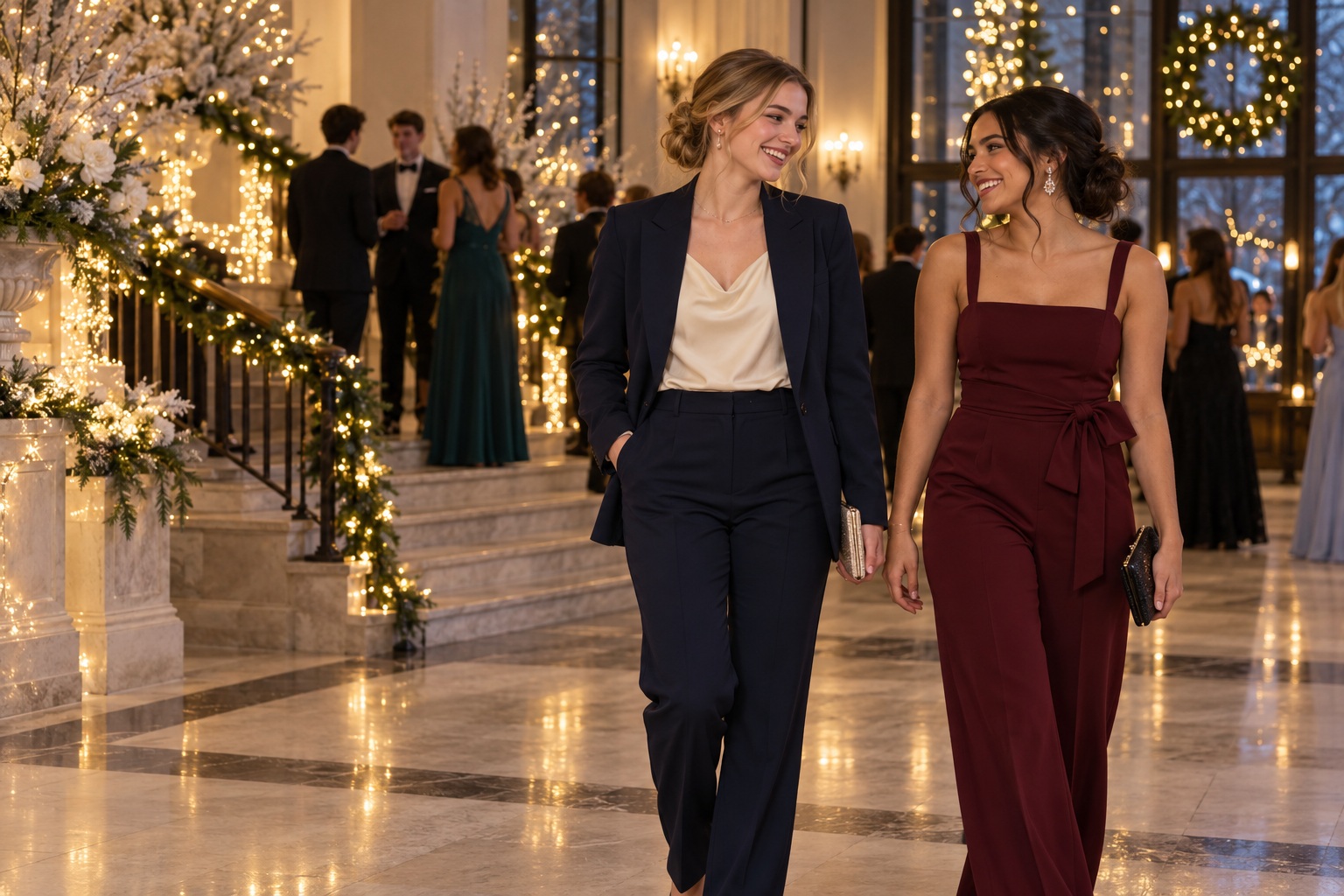
Winter Formal Outfits: A Student’s Style Checklist
Winter formal outfits can mean very different things from one school to another. One invitation may describe a semi-formal dance, while another school treats its winter formal more like a ball. The name alone does not tell you whether a short dress, a long gown, a jumpsuit, or a suit will feel right. Start with the event your school is actually holding, then choose an outfit that meets its rules and lets you move comfortably.
This guide is for a school winter dance. It gives you a simple decision path, including options beyond a dress, and a try-on checklist for movement, shoes, and the coat you wear on the way in. If you meant a winter wedding or an adult black-tie event, use the dress code on that invitation instead. The useful outfit is the one that fits the occasion, your preferences, and the school’s current policy.
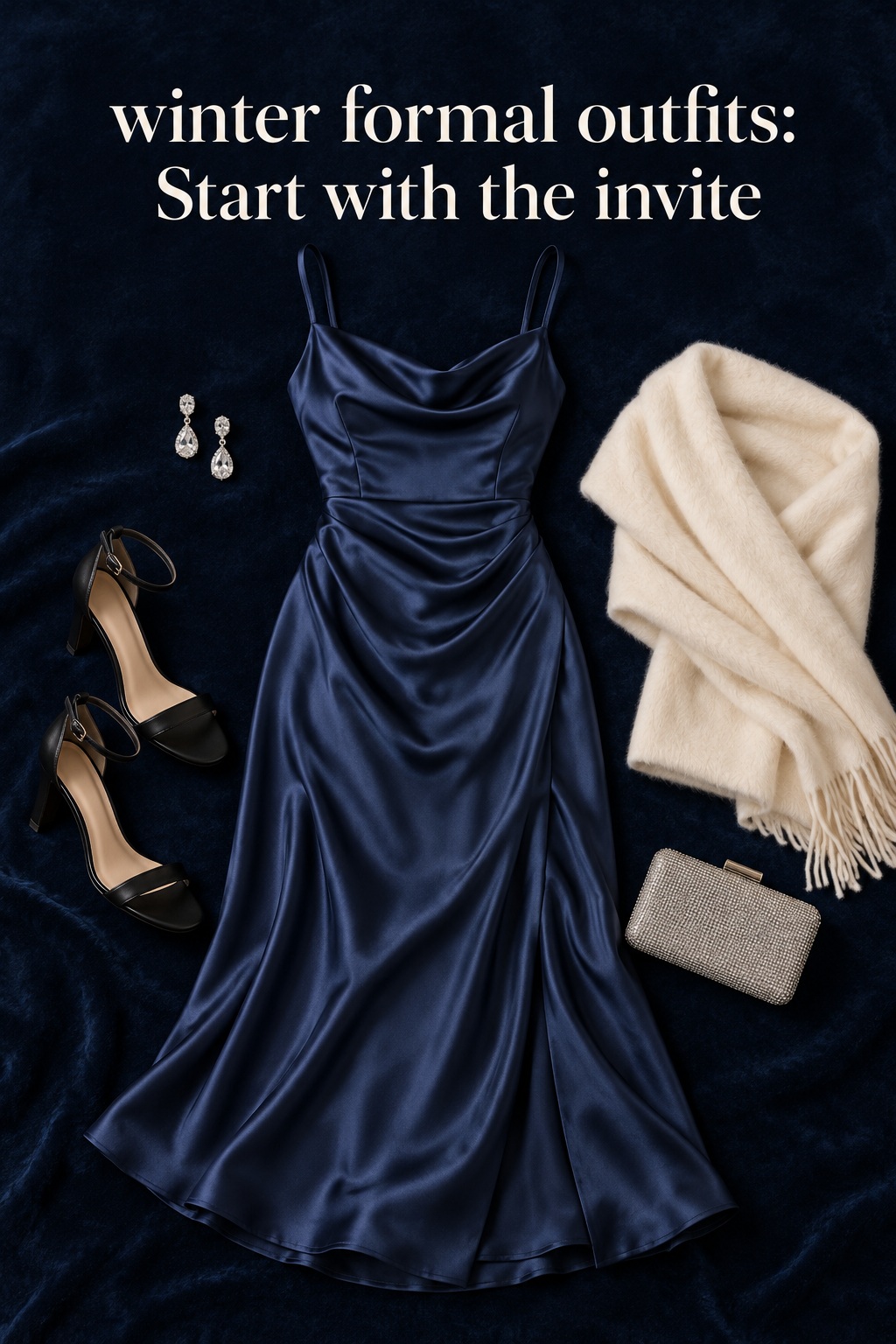
First identify which winter formal the invitation means
The phrase winter formal often points to a school dance in the United States, but it can also describe a winter wedding or another formal event. The search results mix these meanings. Some school-dance guides describe the event as sitting somewhere between homecoming and prom, while wedding guides use winter formal to mean a formal wedding dress code. These are different situations, so avoid choosing an outfit from a guide until you know which one applies to you.
Read the invitation for the event name, dress code wording, venue, and any mention of a theme. If the invitation says cocktail, semi-formal, formal, or black tie, treat that label as the starting point. A school may also publish its own rules for dances. Those rules can cover garment length, cutouts, straps, necklines, sheer panels, or other details. The rules are specific to that school and can change, so use the current event information rather than a generic list from another school.
Found the dress? Keep the rest in one place.
Zarellea brings guest details, vendors, timelines, and every next step together — so your wedding plan feels as good as your look.
When the invitation is unclear, ask the organizer or check the school’s event page before you settle on a look. You can also ask a trusted friend what the event usually feels like, but use that as context, not as a replacement for written guidelines. If a school gives a way to confirm an outfit ahead of time, use it when you are unsure. That small step is especially helpful if you are choosing something with a length, neckline, or cutout that may be interpreted differently by different people.
It also helps to separate the dressiness question from the style question. First decide what level the event expects. Then choose the silhouette and details that feel like you within that range. A winter formal may be dressier than an ordinary school dance at one school and more relaxed at another. There is no single universal rule that every winter formal requires a floor-length gown. A school-dance guide from Jovani describes this variation and recommends matching the actual tone of the school’s event. Jovani’s winter formal dance guide is one example of that school-specific framing.
Before shopping or trying on what you already own, write down the practical boundaries: the dress-code wording, the formality you expect, whether there is a theme, and what kind of movement the night includes. That short note narrows the choices without deciding your outfit for you. If the dance includes dinner, photos, and time on a dance floor, you may want a look that feels complete in each moment. If it is a shorter event, you may prefer to spend less time coordinating extra pieces.
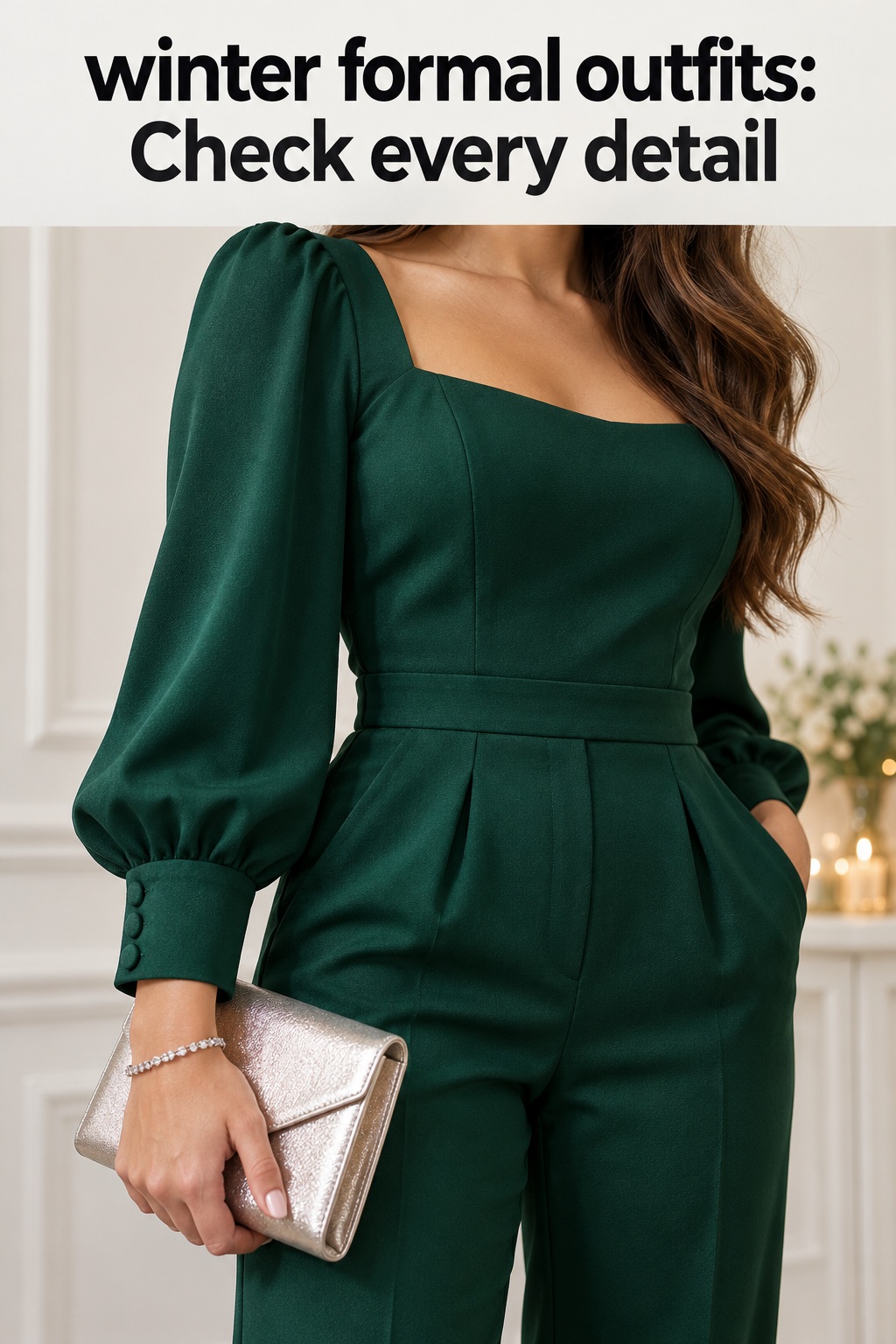
Choose an outfit anchor that fits the school rules
An outfit anchor is the main piece that sets the look: a dress, jumpsuit, suit, or coordinated separates. Choosing the anchor first helps you judge the rest of the outfit against it. You do not need to begin with a dress just because many winter formal pages show dresses. Formal dressing can take more than one shape, provided the school allows it and the final combination matches the invitation.
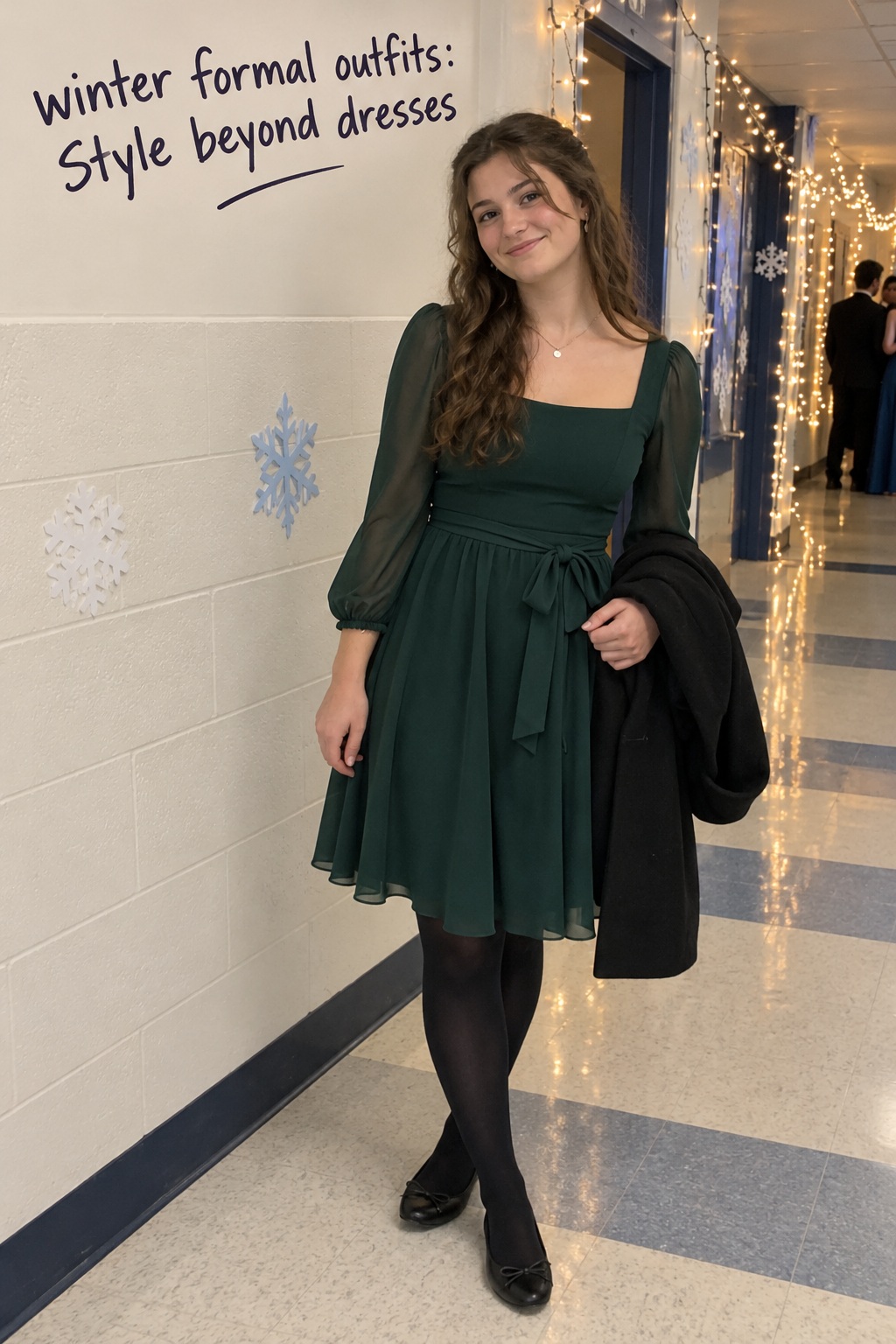
A dress can make the outfit feel instantly occasion-ready because the silhouette and fabric do much of the work. A shorter or cocktail-length shape may feel easy to move in, while a midi or floor-length version can feel more dramatic. Rather than assuming a length is correct, check the school’s wording and test the hem with your shoes on. Notice whether the skirt catches when you turn, sit, or take a full step. If you like the look but not the movement, try another shape before adding layers or accessories.
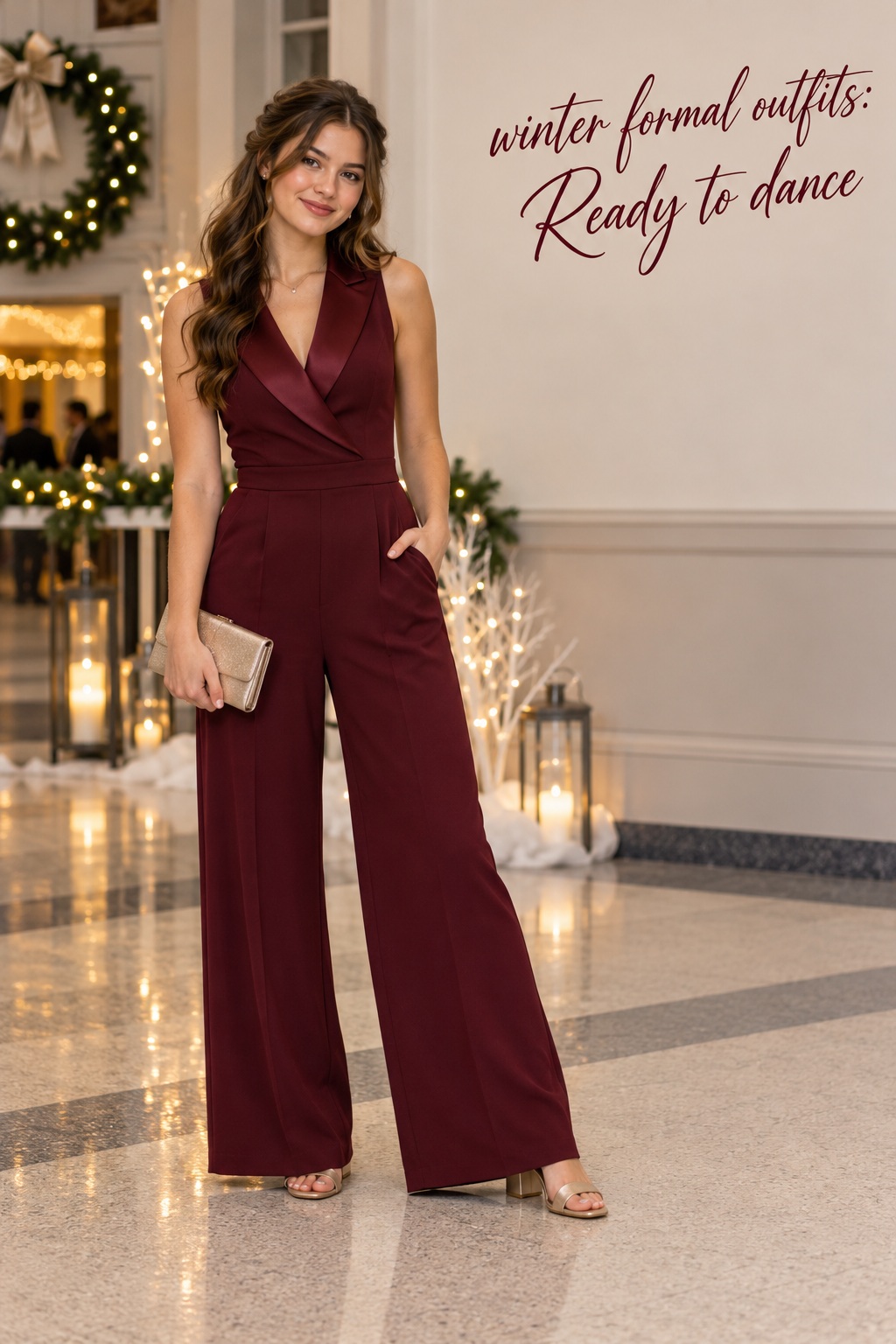
A jumpsuit offers a one-piece alternative with a more tailored or playful feel. Check how it fits when you sit, lift your arms, and bend slightly. A jumpsuit can look polished with a defined waist, a clean neckline, or a jacket, but the details should still meet your school’s policy. Pay attention to how easy it is to use the restroom and whether the fastening is manageable without help. These small practical checks can matter as much as the mirror view when you will be away from home for several hours.
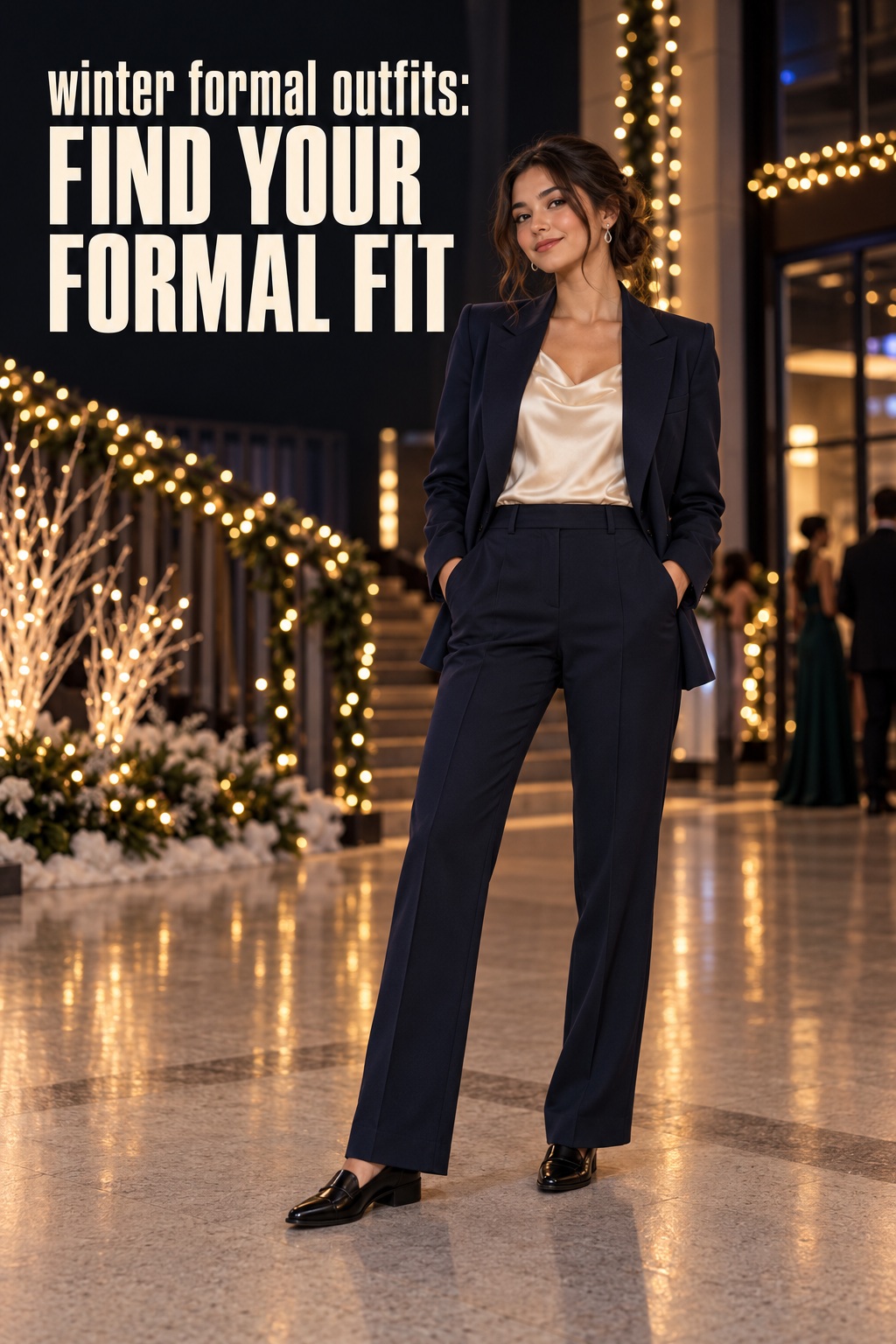
A suit or coordinated separates can create a formal look without a gown. Consider a tailored jacket with matching trousers, a vest with dress pants, or a dressy top and skirt that share a clear color or finish. A tie, bow tie, jewelry, or a distinctive shoe can make the styling feel intentional, but none is required to prove that the outfit is formal. Look at the complete combination, including the shirt or top under the jacket, so the outfit still feels finished if you remove the outer layer indoors.
For any anchor, check what the school says about coverage or garment details. Do not rely on an online rule from a different district, a retailer’s guide, or an old dress-code PDF to predict your school’s standard. Some schools have precise measurements, while others describe expectations in broader terms. If the wording is unclear, ask the event contact before making changes to a garment. The goal is to know what the policy says, not to guess how an adult may interpret it at the door.
Once the anchor passes that first check, decide what makes it feel personal. That may be a color you enjoy, a subtle sparkle, a simple neckline, a textured jacket, or shoes that change the mood. Pick one or two details that work together. You can make an outfit feel memorable without making every element compete. If your main piece already has sequins, beading, a print, or a strong shape, let one of the accessories stay quieter so the look has room to breathe.
Build three complete outfit paths beyond one default dress
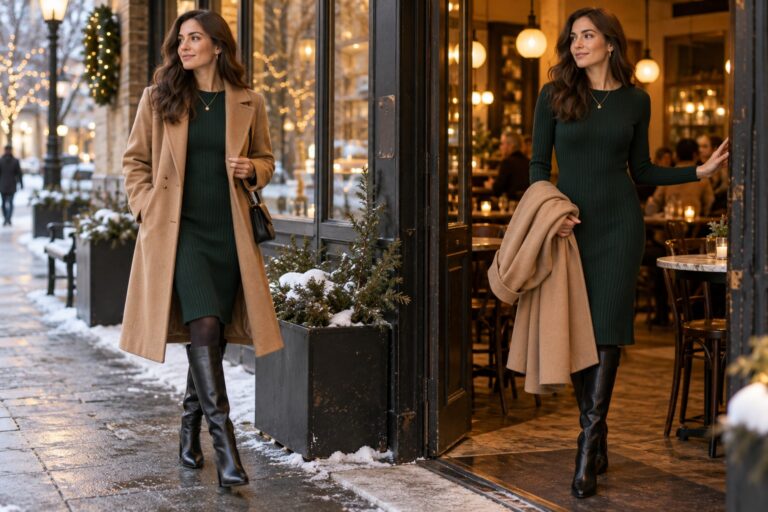
Path one: a dress with a removable layer. Start with a dress that meets the school’s guidelines and the event’s formality. Add a coat, wrap, or shawl for the trip between home, car, and venue. Choose a layer that sits comfortably over the dress and can come off without disrupting straps, sleeves, or jewelry. If you will carry it inside, consider whether it can be checked, stored with a trusted adult, or held without becoming inconvenient. The outer layer is part of the full look in arrival photos, so see how the pieces look together before the event.
Path two: a jumpsuit with a clear finish. Let the jumpsuit establish the silhouette, then use a jacket or a single accessory to make it feel formal. A belt can define the waist if the garment is designed for one, while a neat earring or a clutch-sized bag can add a finishing point. Keep the shoes compatible with the hem so fabric does not drag or bunch. Try the complete look with the layer on and off. A winter formal can take place in a heated indoor space, so a removable option gives you flexibility without making the base outfit depend on a heavy coat.
Path three: a suit or separates with one evening detail. A matching suit can feel crisp and confident, while separates can be more expressive. Start with the most formal piece, such as a structured jacket or polished trousers, and add a top that meets the dress code. Then choose one evening detail: a satin-like finish, a contrasting shirt, a tie, a small piece of jewelry, or a shoe with a cleaner shape. The aim is not to make the outfit resemble a business uniform. A thoughtful proportion or an unexpected color pairing can give the tailoring a party mood.
These are starting points, not three shopping assignments. You might already own an outfit that works. Try it on before looking for something new, then identify the single missing piece. If the outfit needs a jacket for arrival, see whether one in your closet fits over the main piece. If the shoes work but feel plain, perhaps a small accessory is enough. If you need to buy something, knowing the missing role makes the choice more focused. No one needs a separate wardrobe for every school dance.
Color and texture can help connect the pieces. You could repeat one color in the shoes and a small accessory, or place a smooth fabric next to a textured layer. A dark base can make a bright or metallic accent stand out, while a lighter outfit may feel complete with a simple coat. These are visual suggestions rather than rules about which colors belong in winter. Pick colors you enjoy and that fit the event’s theme or guidelines if there are any.
For inspiration, notice the whole outfit in a photo rather than focusing only on the dress. Look at how the wearer handles the outer layer, bag, and shoes. Ask what the outfit would need if the original setting changed: a different shoe for more movement, a longer coat for the ride, or a smaller bag to keep hands free. The answer can help you adapt a look to your event without trying to reproduce every piece.
Run the outfit through a dance-floor try-on
A mirror check tells you how an outfit looks while standing still. A dance-floor try-on tells you whether it works once you move. Put on every piece you plan to wear, including the undergarments and shoes that will go with the outfit. Walk, sit, reach overhead, turn, and take a few dance steps. You do not need to perform a routine. You are checking for pulling, shifting, pinching, tripping, or anything that makes you keep adjusting the clothing.
For a dress or skirt, watch the hem as you step and turn. See whether a slit or layered skirt shifts in a way that still feels comfortable and consistent with the school rules. For a jumpsuit, check the length while wearing the shoes you chose. For trousers, sit down and stand back up to see whether the waistband or jacket remains comfortable. Raise your arms to test sleeves, straps, and shoulder seams. If any piece moves in a way you do not like, try a different styling option or ask a tailor about an adjustment.
Test footwear on the floor where you can take normal steps. Heels may look the way you want but feel difficult after standing or dancing. Flats, dressy boots, or a lower heel can also work if they fit your outfit and event. If you plan to bring a second pair, check that the hem still works with both pairs. Keep a shoe change in a small bag only if you know where it will be stored and how you will carry the extra shoes.
Check your outer layer too. Put it on over the full outfit, fasten it, and sit with it on. Then remove it and see whether the outfit underneath still feels complete. A wrap or coat that slides off the shoulder or catches on a sleeve may be frustrating during arrival or photos. A coat with a clean opening can make the look feel finished without covering every detail. Choose a layer you can manage independently, especially if you expect to carry it inside.
Ask a trusted person to take a few ordinary photos from the front, side, and back if that would help you see the full silhouette. This is a personal check, not a requirement. Make sure the photos are shared only with people you trust and follow the school’s rules if you are asked to submit an outfit for advance approval. If you do not want photos, use a full-length mirror or record a private movement check for yourself, then delete it when finished.
A winter formal is still your event. If a dress, suit, jumpsuit, or another formal option lets you participate comfortably and meets the school’s policy, choose the one that feels most like you. Do not keep an outfit that requires constant tugging or shoe balancing just because it looks right in one still image. A successful look lets you think about the dance, your friends, and the night instead of managing the clothes every few minutes.
Finish with a small event-night checklist
Once the main outfit works, confirm the small details. Check the invitation one more time and make sure the complete look follows the current school rules. Put the outer layer with the outfit, decide where it will go during the dance, and make sure you can carry your bag comfortably. If a garment needs an alteration, schedule it early enough to try on the finished version with the same shoes and underlayers.
Choose accessories that will stay in place while you move. Secure earrings, test the clasp on a necklace, and check that a bag closes. If you want to wear a hair accessory, try it with the hairstyle you expect to have. You do not need to add every possible finishing touch. One accessory can be plenty when the main outfit already has a strong color, texture, or silhouette.
Make a short plan for getting ready. Set aside the outfit, shoes, socks or hosiery if needed, underlayers, coat, and any small items you plan to bring. If you are borrowing something, confirm when and how you will return it. If you need help with a zipper, clasp, or dress fastening, ask in advance rather than discovering the problem when it is time to leave. These are simple details, but they can reduce last-minute stress.
Do a final movement test after any change. Swapping the shoes or adding a jacket can change how the hem falls and how the outfit moves. Look at the whole outfit in the version you will arrive in, then take the outer layer off and check the dance-floor version. If both feel like complete looks, you are set. If one does not, make one adjustment rather than rebuilding everything from scratch.
Some school-dance guidance also recommends checking the rules, choosing shoes that work for movement, and planning a removable layer. Those are practical prompts, not a single prescribed outfit. Sherri Hill’s winter formal guide offers one example of that advice while showing how school dances can differ in dressiness. Let the school policy set the boundaries, then use your own taste to make the outfit personal.
FAQ
What should I wear to a winter formal at school?
Start with the invitation and your school’s current dress code. A dress, jumpsuit, suit, or coordinated separates can work if the combination fits the event’s formality and the school rules. Then test the outfit with the shoes and outer layer you plan to wear.
Do winter formal outfits have to include a long dress?
No universal rule makes every school winter formal a floor-length event. Some schools expect a more formal look, while others allow cocktail-length outfits or tailored alternatives. Check the wording for your specific dance before settling on a length.
Can I wear a suit or jumpsuit to winter formal?
A suit, jumpsuit, or coordinated separates can be a formal outfit option when the school permits it and the overall styling fits the event. If the guidelines are unclear, ask the event organizer. Try the complete look on with shoes and any jacket before the dance.
How can I make a winter formal outfit easier to dance in?
Try walking, sitting, reaching, turning, and dancing in the full outfit before the event. Check that hems do not catch, straps stay comfortable, and shoes feel manageable. If a piece keeps shifting or needs constant adjustment, change the styling or choose another option.
What shoes should I wear to a winter formal?
Choose shoes that suit the outfit and let you walk and dance comfortably. Dressy flats, boots, or heels are possible options. Test them with the outfit’s hem, and if you bring a second pair, plan where to keep the extra shoes during the event.
How should I stay comfortable on the way to a winter formal?
Plan a removable coat, wrap, or jacket for arriving and leaving. Try it over the full outfit to see whether it stays in place and comes off easily. Keep the base look complete without the outer layer for time inside the venue.
Is a winter formal the same as a winter wedding formal?
No. A school winter formal is a dance, while winter formal can also describe a wedding dress code. Follow the invitation for the event you are attending. Wedding guests should use the couple’s stated dress code rather than a school-dance guide.
What if my school dress code is unclear?
Ask the event organizer or school staff before the dance. Do not assume a rule from another school applies to yours. If your school offers advance outfit review, you can use that process to confirm a detail you are unsure about.