Hippie Style Clothing, Boho, and Boho-Chic Explained
On a city street, at a festival, or in an everyday wardrobe built around comfort and expression, hippie style clothing still shows up with surprising range. The challenge is that it is often grouped together with boho style, bohemian fashion, and even broader festival fashion, even though each has its own logic. A paisley maxi dress, a peasant blouse, or a fringe jacket can read distinctly hippie, softly boho, or simply trend-driven depending on silhouette balance, color choices, and how the outfit is finished.
This is why the comparison matters. Hippie fashion has clear roots in the 1960s counterculture, the flower power era, and the California scene that shaped a relaxed, expressive wardrobe language. Boho style overlaps with that history but often filters it through a more polished, editorial lens. Understanding where they meet and where they separate makes shopping easier, styling more precise, and outfit decisions more intentional.
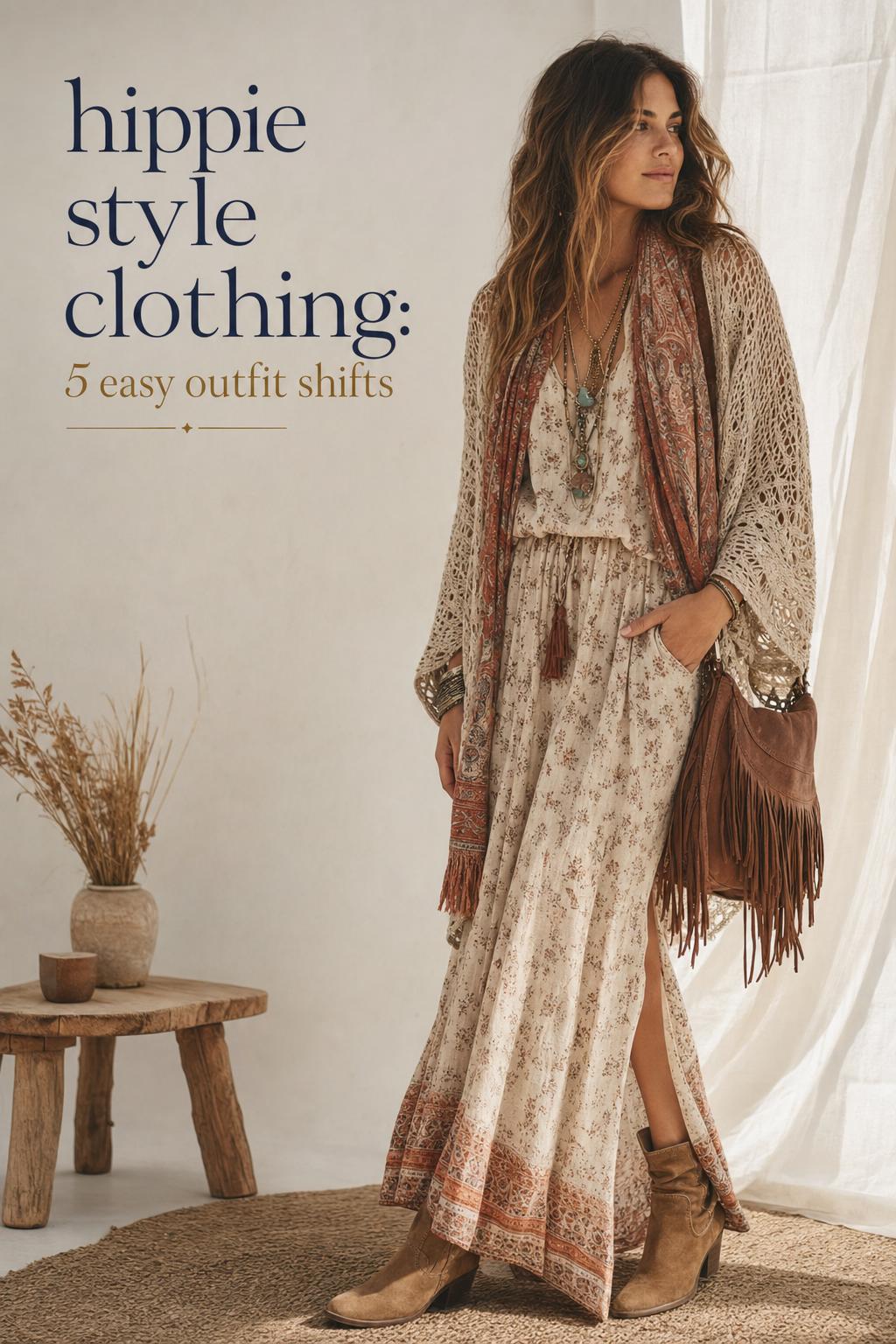
Below is a style breakdown that compares hippie style clothing with boho and modern boho-chic dressing. The focus is practical: what defines each look, how they differ visually, which garments do the most work, and how to wear them in real wardrobes without flattening them into the same aesthetic category.
Style overview: hippie style clothing
Hippie style clothing is rooted in the late 1960s and early 1970s, shaped by the broader counterculture movement in the United States and influenced by parallel shifts in London fashion. It developed as fashion moved beyond early 1960s Mod references and into softer, more free-form silhouettes. In practical terms, this means clothing that values movement, ease, handmade character, and visual individuality over strict structure.
Found the dress? Keep the rest in one place.
Zarellea brings guest details, vendors, timelines, and every next step together — so your wedding plan feels as good as your look.
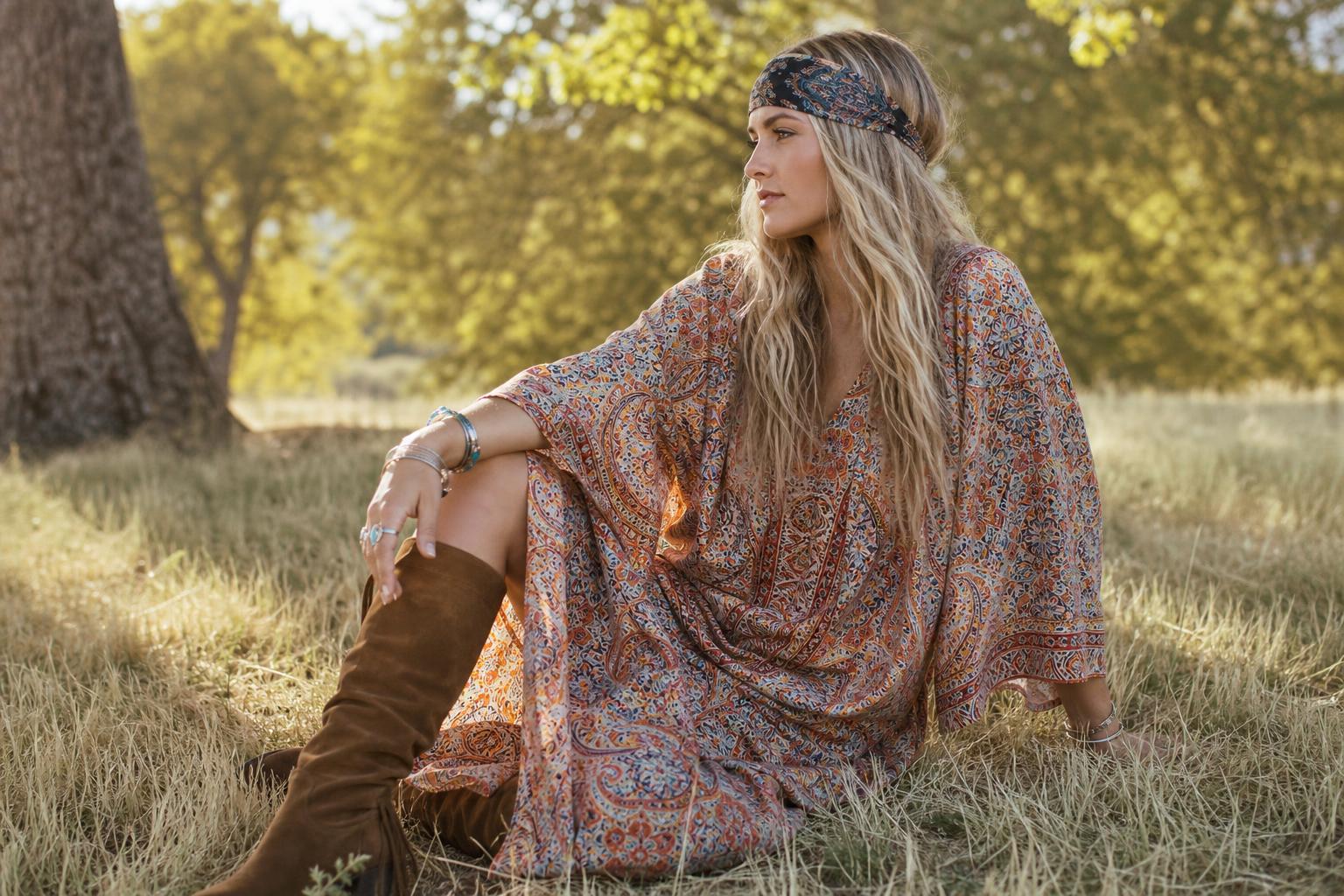
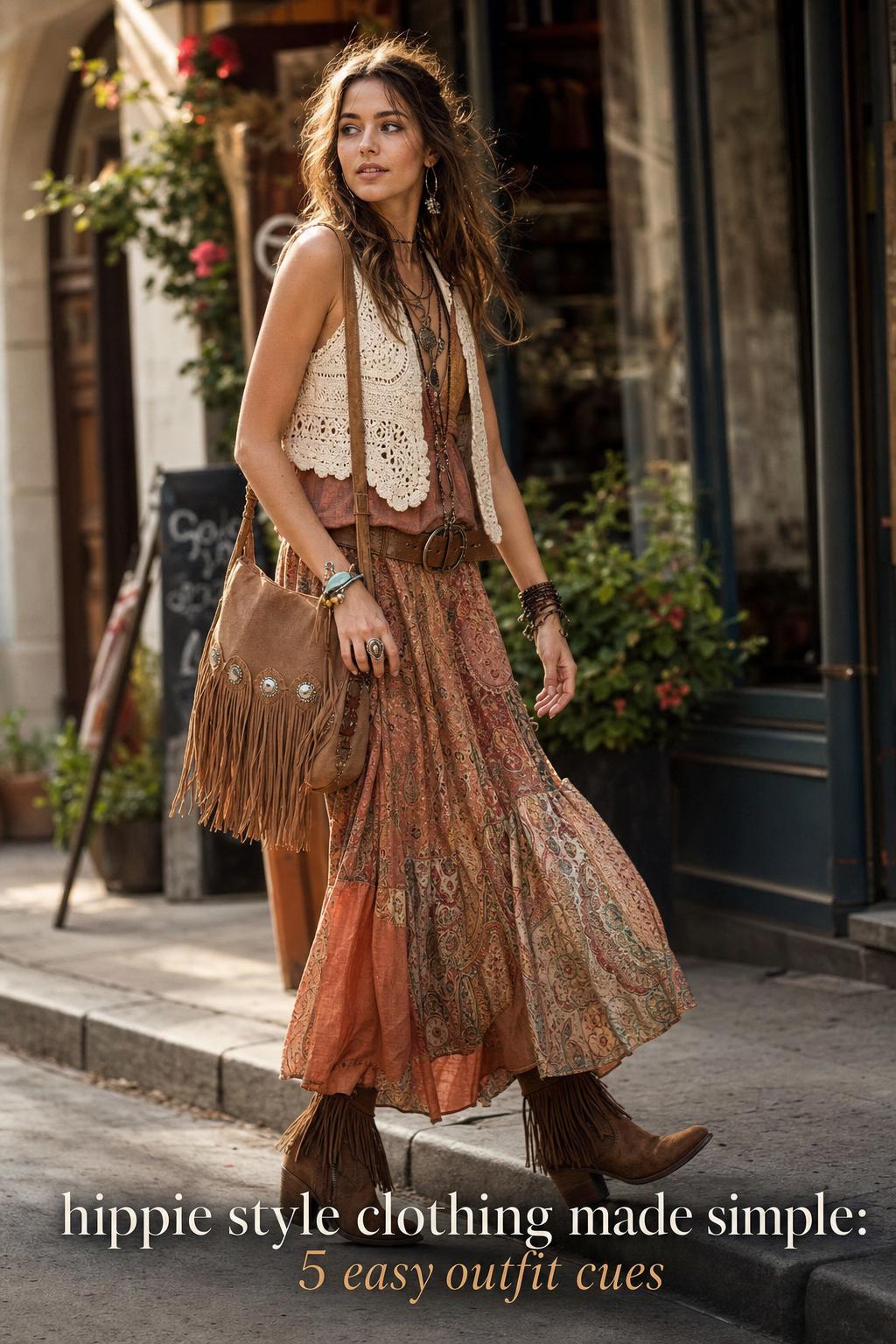
The defining characteristics are familiar: peasant blouses, maxi dresses, peasant dresses, bell-bottoms, tie-dye, paisley prints, fringe, crochet tops, tunics, and suede boots. Natural fibers and handmade-looking textures matter because they support the relaxed mood that sits at the center of hippie fashion. Earthy tones, naturals, and sun-faded color stories are common, but the style also includes vivid flower-power energy when prints and embellishment come into play.
Its visual mood is expressive rather than polished. A hippie-inspired outfit usually feels intuitive, layered, and culturally tied to the 1960s fashion revolution, the California lifestyle, and the idea of dressing as personal identity rather than social formality.
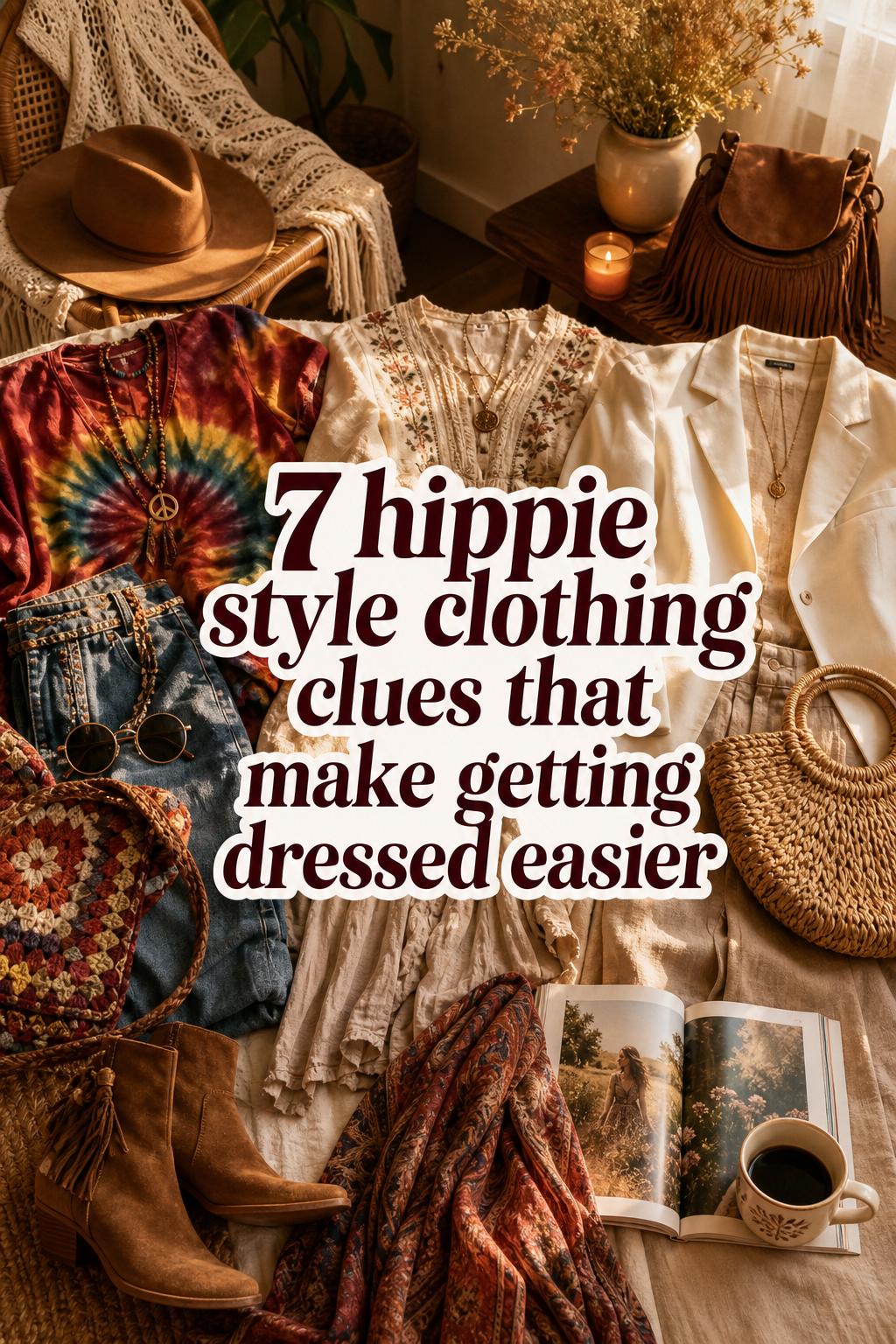
Style overview: boho style
Boho style, or bohemian fashion, shares many surface-level elements with hippie dressing, which is why the two are constantly confused. It uses flowy blouses, layered jewelry, maxi dresses, kimonos, and textured accessories, but the overall composition often feels more edited. Boho can still look relaxed, yet it is usually more curated in proportion, more selective in palette, and more adaptable to current fashion cycles.
Where hippie style clothing often emphasizes a direct connection to 1960s counterculture and flower power references, boho style broadens the frame. It draws on bohemian aesthetics as a category and can move from historical to celebrity-led, from everyday soft dressing to festival-ready styling. In contemporary retail, brands such as Free People and Anthropologie help define this modern boho vocabulary through peasant tops, blouses, dresses, and accessories that feel wearable in current wardrobes.
The color palette can still include earthy tones and naturals, but boho style often looks more harmonized. The mood is romantic, fluid, and decorative, but not always as intentionally anti-structured as classic hippie fashion.
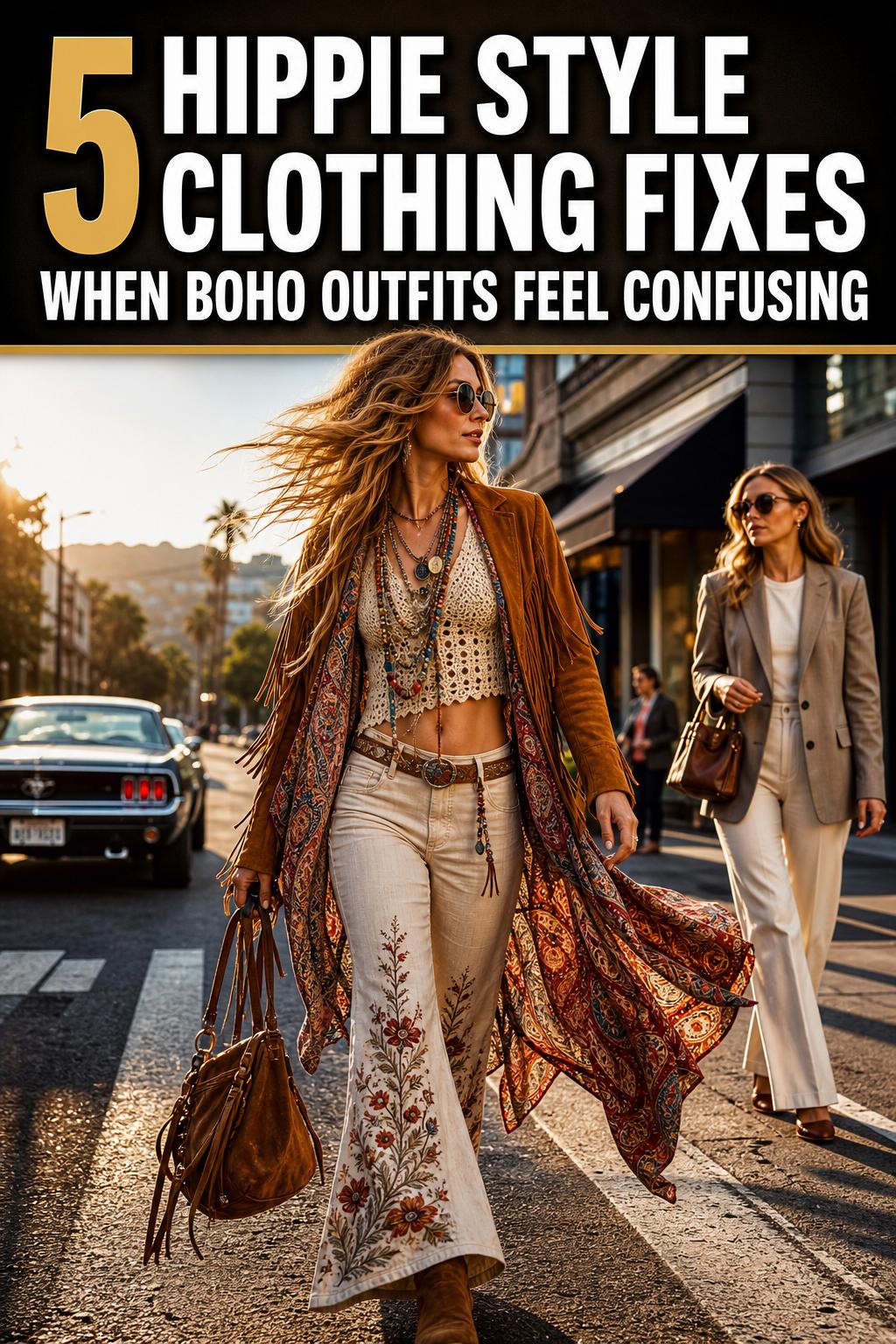
Style overview: modern boho-chic
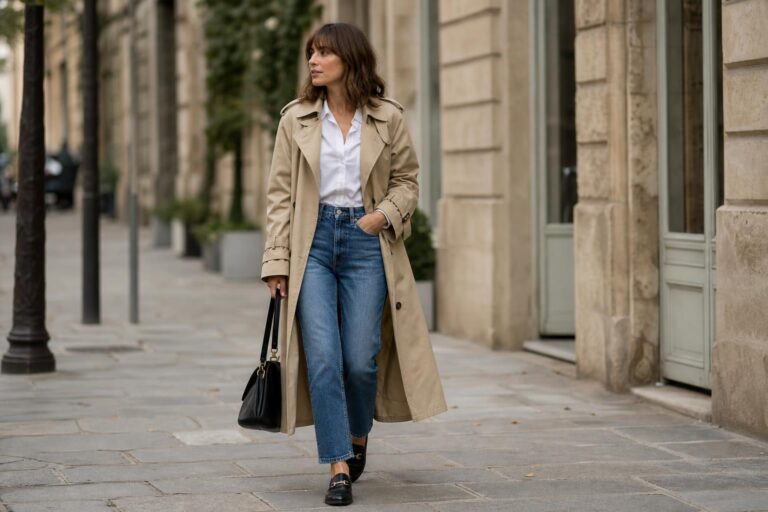
Boho-chic is best understood as the retail and styling bridge between historical hippie influence and present-day fashion consumption. It keeps the visual cues people recognize instantly, such as fringe accessories, peasant tops, maxi silhouettes, layered jewelry, and festival styling, but presents them through a more trend-aware lens. It is the version most likely to appear in shopping edits, sale roundups, and celebrity-influenced wardrobes.
In outfit composition, boho-chic tends to be cleaner than a literal hippie look. It may borrow a paisley print or a flowy blouse, but it usually offsets these details with sharper styling decisions. The result is less historical reenactment and more modern interpretation. This is especially relevant for readers who like the softness of hippie fashion but want it to function in current city dressing, travel wardrobes, or low-effort occasion wear.
Where the overlap begins
The confusion around these aesthetics comes from a shared garment vocabulary. Maxi dresses, peasant blouses, fringe, crochet, kimono layers, paisley prints, and natural fabrics appear across all three categories. They also circulate through the same modern spaces: festival fashion, celebrity styling, vintage references, and online shopping at stores centered on boho or hippie clothing.
Historically, the overlap also makes sense. Fashion in the 1960s did not move in a single line. The transition from Mod to boho and hippie style involved changing youth culture, shifting ideas about self-expression, and distinct fashion hubs including London streets associated with style experimentation and the California hippie scene in the United States. Figures such as Mary Quant stand as historical anchors to the era’s fashion revolution, even though the end result of hippie dressing moved away from the sharper lines associated with earlier Mod energy.
That means the difference is rarely about one item alone. A peasant blouse can belong to hippie style clothing, boho style, or boho-chic. What changes is the context: how much layering is used, whether the palette leans earthy or refined, whether the accessories look handmade or polished, and whether the outfit feels rooted in counterculture references or current retail styling.
The key differences that separate hippie, boho, and boho-chic
Silhouette and structure
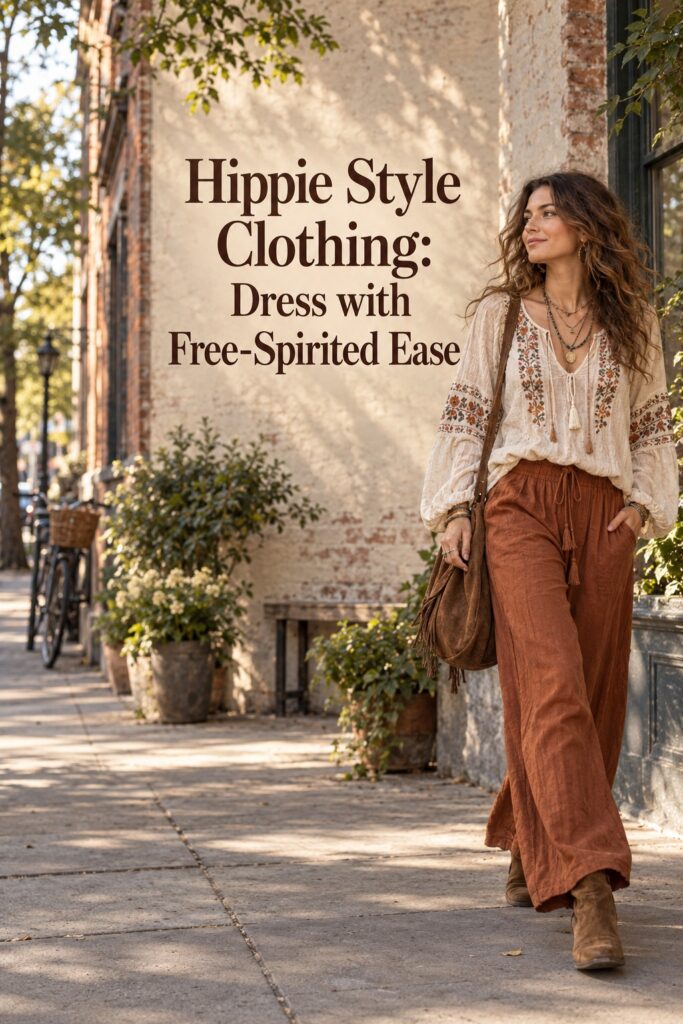
Hippie fashion generally favors looseness and freedom of movement. Maxi dresses skim rather than define the body, peasant tops drape softly, bell-bottoms widen the line of the leg, and layering often feels spontaneous. Boho style still prefers fluid shapes, but the silhouette tends to be more composed. Boho-chic is the most controlled of the three, using soft garments within a clearer outfit framework so the look reads intentional rather than accidental.
Color palette and print use
Classic hippie style clothing often embraces earthy tones, naturals, tie-dye, and expressive paisley prints in a way that directly signals the flower power era. Boho style uses similar colors, but often with more tonal layering and less visual noise. Boho-chic usually edits the palette further, relying on one statement print or one textured focal piece rather than several competing references at once.
Styling philosophy
Hippie dressing is historically tied to identity, counterculture, and the rejection of rigid fashion codes. Boho style is more aesthetic in its modern use. It can still carry that free-spirited mood, but it often functions as a visual language rather than a social statement. Boho-chic is the most fashion-system-friendly version, shaped by shopping behavior, trend cycles, and the way editors and retailers translate historical influence into current wardrobes.
Typical wardrobe pieces
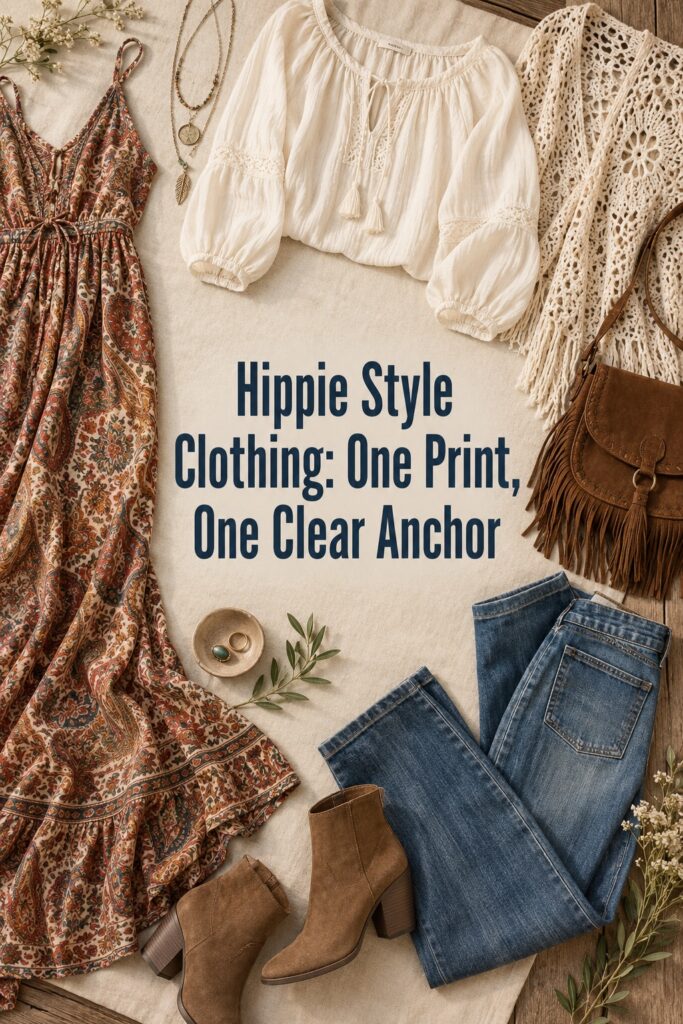
For hippie style clothing, core pieces include peasant dresses, peasant blouses, tie-dye tops, bell-sleeve blouses, fringe skirts, crochet tops, tunics, maxi dresses, and suede boots. Boho style keeps many of these but often adds layered jewelry, kimonos, and more refined blouses. Boho-chic is usually built around easy hero items that are simple to shop and style now, such as a printed maxi dress, a peasant top with denim, or a fringe accessory paired with a cleaner base outfit.
Visual style breakdown in real outfits
Layering approach
In a classic hippie outfit, layering often looks lived-in rather than sharply coordinated. A tunic over flared trousers, a crochet top under a kimono, or a peasant blouse with layered textures all fit naturally. The visual effect is additive. In boho style, layering becomes more selective. One soft outer layer may frame a maxi dress instead of competing with it. In boho-chic, layering is usually reduced to preserve clarity, especially if the print or texture is already strong.
Garment proportions
Hippie fashion often pairs volume with volume: wide sleeves, flowing lengths, and flared hems can coexist in the same look. Boho style usually balances those proportions more carefully. If the blouse is full, the skirt or pant line may be calmer. Boho-chic relies most heavily on proportion play, using one loose element as the statement while the rest of the outfit acts as a visual anchor.
Accessories and finish
Accessories reveal a lot. Hippie style clothing tends to favor a handmade or collected impression through fringe, layered jewelry, soft bags, and pieces that feel personal rather than coordinated. Boho style keeps layered jewelry as a defining marker but usually integrates it with more restraint. Boho-chic often treats accessories as finish rather than foundation, choosing one fringe detail or one jewelry cluster to complete the outfit composition.
Footwear choices
Suede boots are a recurring reference in hippie fashion because they support the grounded, textured feel of the clothing. In boho and boho-chic wardrobes, footwear can still nod to that softness while appearing slightly more polished in the overall styling. The practical takeaway is simple: the more historical and expressive the outfit, the more the footwear can participate in the theme. The more modern the outfit, the more the shoes should stabilize it.
Historical context that still shapes the difference
Any comparison between hippie style clothing and boho style works better when the 1960s are kept in view. The era was not just producing new hemlines or popular prints. It was restructuring fashion itself through youth culture, music influence, geographic style centers, and a broader appetite for expressive dressing. London and the United States were both central, but they were not doing the same thing in the same way.
Early 1960s fashion energy is often linked to Mod references and designers such as Mary Quant. Later in the decade, that line softened and expanded into the boho and hippie crossover. The California scene became especially important to the language of hippie fashion, while London’s streets remained influential in defining how style moved publicly and quickly. Rock icons including The Beatles, along with noted figures such as Pattie Boyd and Joplin, helped turn these shifts into visible fashion cues.
This explains why boho and hippie cannot be treated as identical. Boho can trace part of its modern popularity to the same historical current, but hippie fashion is more tightly attached to the counterculture frame and to era-specific motifs such as paisley, peasant dressing, bell-bottoms, and flower-power symbolism.
The garment test: which pieces lean hippie and which lean boho?
- A peasant blouse in natural cotton with loose sleeves and layered jewelry leans hippie when styled with flares or a maxi skirt.
- The same peasant blouse paired with a more edited outfit and fewer accessories reads boho.
- A paisley maxi dress becomes distinctly hippie when combined with fringe, suede boots, and multiple textured layers.
- A maxi dress in a softer print or tonal palette often reads boho-chic when the rest of the outfit stays restrained.
- Crochet tops and tunics are closer to classic hippie dressing when the styling feels handmade and relaxed.
- Kimonos and boho jewelry tend to push a look toward modern boho when used as selective statement pieces.
This garment test is useful because many shoppers focus too narrowly on the product page name. A “boho dress” and a “hippie dress” may share nearly identical features. What ultimately distinguishes them is styling logic, not just retail labeling.
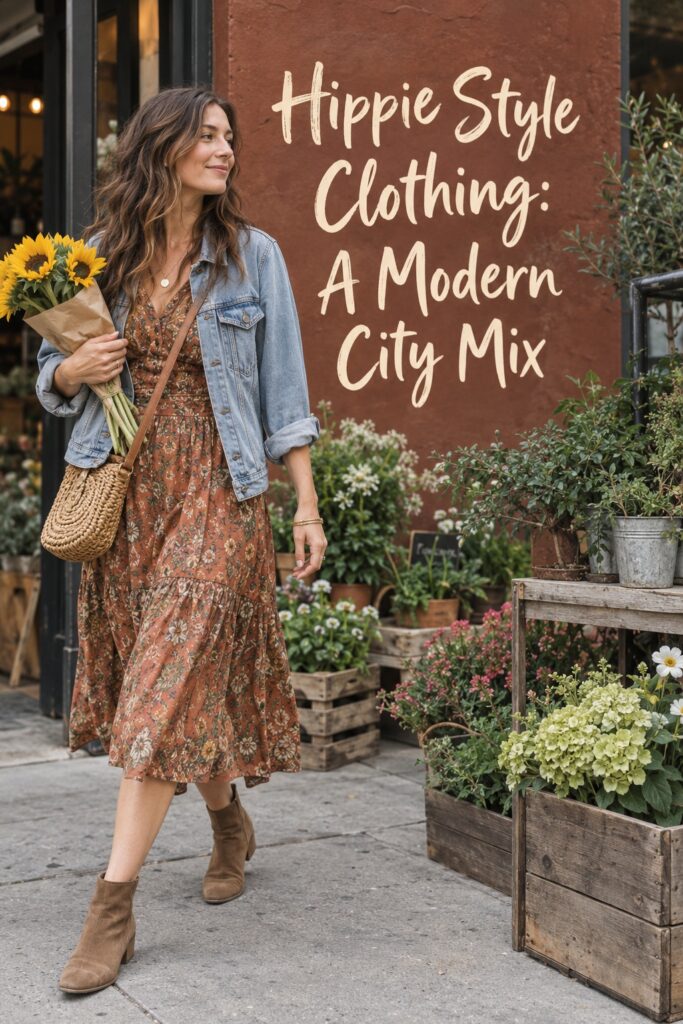
Outfit comparison: the same situation through different style lenses
Casual daytime outfit
A hippie interpretation might start with a peasant top, flared bottoms, and soft accessories that feel layered over time rather than bought as a set. The proportions are relaxed and the textures do a lot of the visual work. A boho version of the same daytime outfit might keep the peasant top but simplify the lower half and tighten the palette. A boho-chic version would likely use one flowing blouse as the focal point and keep the rest streamlined.
Why this matters: casual dressing is where the overlap becomes strongest. The clearest visual clue is whether the outfit feels expressive and era-rooted, or refined and current.
Festival-ready styling
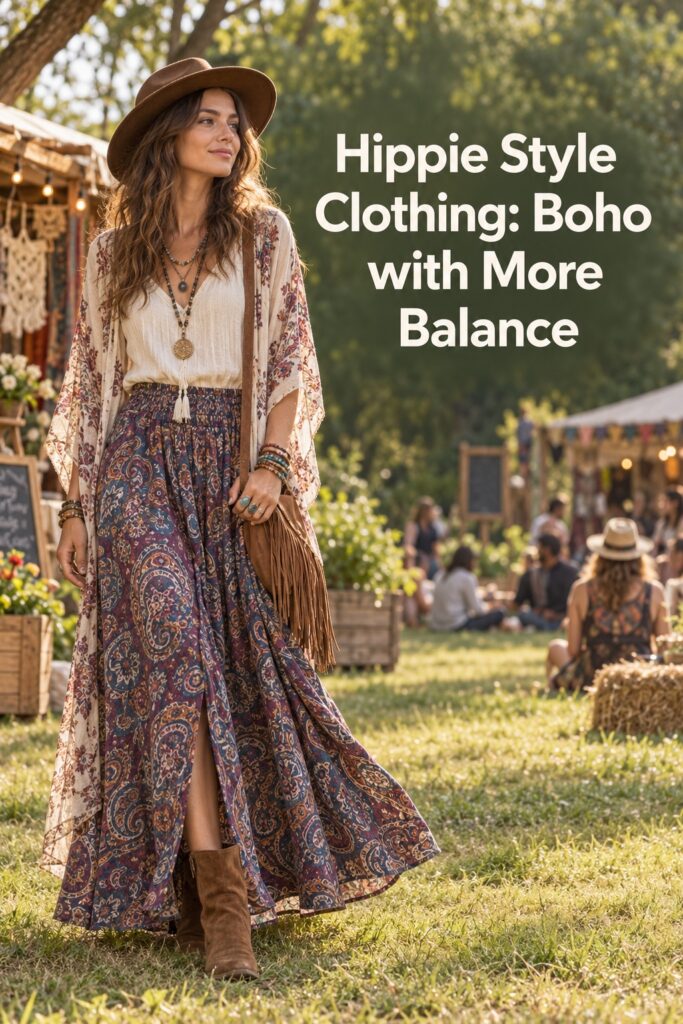
Festival fashion is one of the biggest meeting points between hippie and boho. A hippie-leaning festival outfit may use tie-dye, fringe, crochet, layered jewelry, and a stronger nod to the flower power vocabulary. A boho-chic festival outfit often removes one or two of those elements to avoid visual overload. It may still use a peasant top or maxi dress, but it will usually rely on a clearer statement piece and stronger outfit balance.
The practical difference is comfort and longevity. A heavily layered hippie-inspired look can create strong impact but may feel less adaptable across a full day. A boho-chic festival outfit often translates more easily from daytime to evening because the composition is lighter and more controlled.
Travel wardrobe approach
For travel, hippie style clothing works best when the pieces are breathable, soft, and versatile in movement, especially if the wardrobe is built around natural fabrics. Tunics, maxi skirts, and relaxed blouses fit this logic. Boho style often performs better in mixed travel settings because it can move from casual daywear into dinner or city walking without requiring a full outfit change. Boho-chic is often the easiest to pack because fewer layers and more cohesive color stories create better outfit rotation.
Polished casual dressing
In more polished settings, classic hippie fashion can become difficult if the outfit stays too literal. The key limitation is that volume, print, and texture may all compete. Boho style solves this by editing one variable. Boho-chic solves it even more efficiently by using hippie-inspired elements as accents rather than the full visual system. This is why a single peasant blouse or paisley piece often works better than a head-to-toe reference when the setting requires subtlety.
A closer look at fabrics, texture, and why they change the message
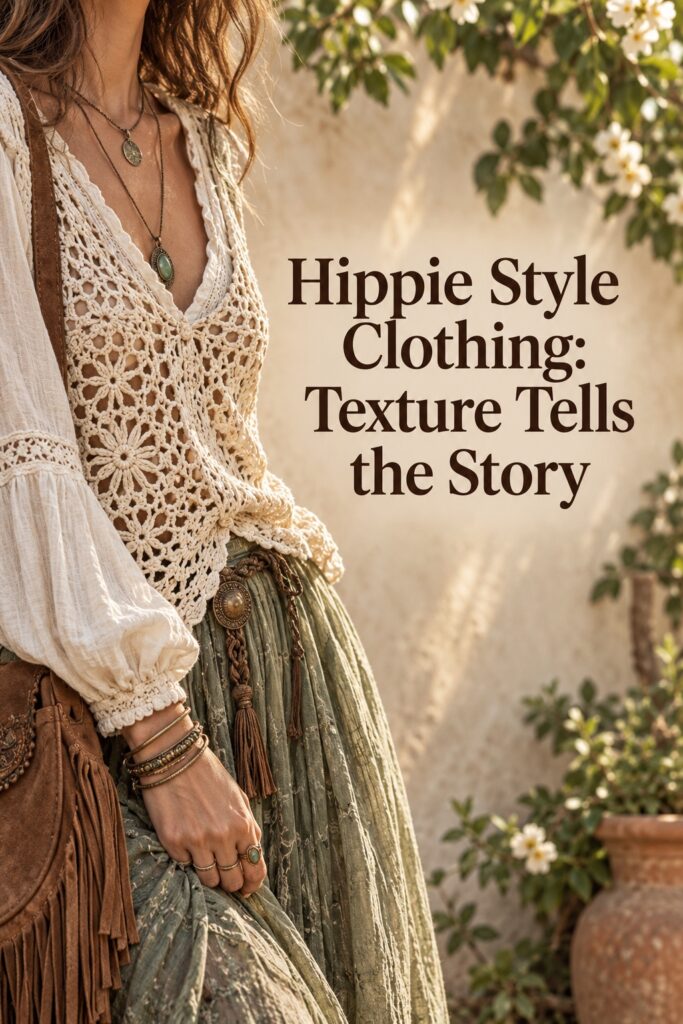
Texture is one of the most reliable tools for distinguishing these aesthetics. Hippie style clothing depends heavily on the tactile language of natural fibers and handmade-looking surfaces. Cotton, hemp, and other natural fabrics support the relaxed, grounded quality that appears across historical and modern interpretations of the style.
Boho style also values texture, but often through contrast rather than accumulation. A soft blouse against a smoother skirt, or one crochet detail against a cleaner base, creates a more editorial finish. Boho-chic tends to use texture strategically. This makes the outfit easier to wear in everyday life because the eye has one clear place to land.
There is also a practical reason natural fabrics matter in this conversation. They support drape, airflow, and movement, all of which are central to how hippie and boho garments are supposed to behave. A peasant blouse or maxi dress loses part of its visual logic if the fabric feels too rigid or overly synthetic in appearance.
Shopping paths: what different retailers tend to emphasize
Retail language often blurs distinctions, so it helps to understand what different shopping paths usually offer. Stores built directly around hippie or bohemian identity, such as Caravan Closet, Hippie Clothes, and Purple Boho, tend to present categories through obvious vocabulary: hippie dresses, bohemian tunics, fringe skirts, crochet tops, maxi skirts, kimonos, and accessories. These spaces are useful when the goal is a clear aesthetic direction.
By contrast, broader fashion retailers and editorial shopping features, including examples tied to Free People and Anthropologie, often frame similar pieces through the language of boho-chic, trend dressing, and festival-ready styling. The garments may overlap strongly with hippie style clothing, but the styling suggestions are usually more current and more accessible to mainstream wardrobes.
The smart approach is to shop by silhouette and textile first, then by label. A peasant top, a paisley maxi dress, or a fringe accessory can work across all three aesthetics if the styling direction is clear from the start.
Tips for building a wardrobe without collapsing the styles into one look
- Choose your anchor first. If the anchor is a paisley maxi dress, keep the supporting pieces aligned with either hippie looseness or boho polish, not both at maximum volume.
- Use one dominant signal. Fringe, tie-dye, layered jewelry, or a peasant blouse can each define the outfit on their own.
- Watch proportion play. Full sleeves, flared pants, and long hemlines can work together, but only if the fabric remains soft and the palette does not become chaotic.
- Let footwear clarify the intention. Suede boots strengthen the hippie reference, while a more restrained shoe supports boho-chic balance.
- Edit accessories when the print is strong. Paisley, tie-dye, and embellished fabrics already carry visual weight.
One of the most common styling mistakes is assuming that more references create more authenticity. In practice, too many motifs at once can turn a thoughtful outfit into costume territory. The strongest hippie-inspired outfits usually feel natural, while the strongest boho outfits feel composed. Both rely on control, just in different ways.
Sustainability and ethics through a hippie style lens
A modern conversation about hippie style clothing increasingly includes sustainability, particularly around hemp, organic cotton, upcycled fashion, and fabric sourcing. This is one of the clearest areas where contemporary reinterpretations add depth to the historical aesthetic. Natural fibers already sit close to the visual identity of hippie fashion, so eco-conscious choices can align with both appearance and wardrobe philosophy.
That said, the presence of natural fabrics alone does not guarantee a better choice. The more useful approach is to think in layers: fabric type, durability, repeat wear, and whether a piece can work across several outfit compositions. A tunic that styles multiple ways has more real wardrobe value than a highly specific festival item that only works once or twice.
Boho style also benefits from this thinking because an edited wardrobe tends to reduce impulse buying. Whether the label says boho or hippie, the strongest long-term purchases are pieces with flexible silhouette, breathable fabric, and enough visual character to hold an outfit without requiring constant replacement.
Global textile influences that expand the conversation
Hippie and boho wardrobes are often discussed through a U.S. and U.K. lens, especially because the California scene and London fashion history are so central. But the textile language associated with these styles also opens into broader global influence. Indian textiles, block printing, ikat, batik, and related textural motifs extend the decorative vocabulary that many modern boho and hippie wardrobes draw from.
These influences matter because they shift the outfit away from a narrow vintage reading and toward a richer understanding of print and surface. A garment with block print or batik influence may still feel compatible with hippie style clothing, but it can also read as part of a broader bohemian wardrobe. In styling terms, these textiles often bring enough character on their own, so the most effective approach is to let them lead rather than compete with heavy fringe or multiple statement accessories.
Where men’s and family styling enter the picture
Although many retail results focus on women’s clothing, the visual logic of hippie fashion is not limited to one category. The same distinctions apply when the look is adapted for men’s styling or broader family dressing: the more direct the connection to 1960s counterculture motifs and relaxed proportions, the more the look leans hippie; the more edited and trend-aware the result, the more it shifts toward modern boho.
This matters for practical wardrobe planning. A family photo, a festival weekend, or a travel wardrobe can hold together visually without everyone dressing in identical references. One person can wear a clear hippie-inspired paisley piece while another uses softer boho layering. Shared color harmony and texture consistency often matter more than matching garment types.
When to choose hippie style clothing and when boho makes more sense
Choose hippie style clothing when the goal is clear visual expression, softness, movement, and a stronger historical connection. It works especially well for festivals, casual creative dressing, warm-weather layering, and wardrobes built around natural fabrics, crochet, paisley, or peasant silhouettes. It also suits people who prefer outfits that feel collected rather than tightly edited.
Choose boho style when you want a similar softness but with more versatility. It is often easier to adapt for travel, casual social settings, and day-to-evening dressing because it operates with more restraint. Choose boho-chic when the setting calls for trend awareness, stronger outfit clarity, or easier integration with a contemporary wardrobe built around a few statement pieces.
There is no strict hierarchy here. One style is not better than the other. The best choice depends on how much visual history, texture, and looseness you want the outfit to communicate at first glance.
A practical city-to-festival framework
This is where the comparison becomes especially useful. In a city setting, a full hippie look can feel intentionally niche, which may be exactly the point. But for readers who want the softness without the full historical signal, boho or boho-chic usually transitions more easily. In a festival setting, the equation reverses: the environment can carry more print, more fringe, more layering, and more obvious flower-power references without the outfit feeling overbuilt.
A strong wardrobe often includes both approaches. A peasant blouse, a maxi skirt, a paisley dress, and layered jewelry can all shift along the spectrum depending on how they are combined. That flexibility is the real advantage of understanding the distinction rather than treating every flowing garment as the same aesthetic.
How to identify the style at a glance
- If the look feels rooted in the 1960s counterculture, flower power, and relaxed self-expression, it is likely hippie.
- If it feels romantic, soft, and decorative but more balanced in composition, it is likely boho.
- If it looks trend-aware, retail-friendly, and built around one or two easy statement pieces, it is likely boho-chic.
- If natural fabrics, handmade texture, and peasant silhouettes dominate, the outfit usually leans closer to hippie fashion.
- If the same pieces appear in a cleaner palette with more editing, the look moves toward modern bohemian style.
The distinction is not about strict borders. It is about reading visual emphasis correctly. In fashion analysis, that is often more useful than relying on category labels alone.
Conclusion
Hippie style clothing and boho style share a common wardrobe language, but they do not communicate the same message. Hippie fashion is more directly tied to the 1960s, the California counterculture scene, flower power, and garments such as peasant blouses, maxi dresses, bell-bottoms, paisley prints, and fringe. Boho style borrows much of that softness and texture, then edits it into a broader, more adaptable aesthetic. Boho-chic refines the formula further for modern retail and everyday styling.
The fastest way to identify each look is to study proportion, layering, and finish. The more expressive, textured, and historically grounded the outfit feels, the more it leans hippie. The more composed and selective the outfit becomes, the more it moves into boho territory. The strongest wardrobes often use both: a hippie-inspired statement piece balanced by boho restraint, or a boho base energized by one unmistakably 1960s reference.
FAQ
What is the difference between hippie style clothing and boho style?
Hippie style clothing is more directly tied to the 1960s counterculture, flower power, and relaxed, expressive dressing. Boho style overlaps in silhouette and texture but is usually more curated, more polished in composition, and easier to adapt to modern wardrobes.
Is boho the same as hippie fashion?
No. They share many garments, including maxi dresses, peasant blouses, fringe, and layered jewelry, but they are not identical. Hippie fashion carries stronger historical and cultural references, while boho is a broader style category that often uses those same elements in a more edited way.
What pieces define a hippie-inspired wardrobe?
The most recognizable pieces include peasant blouses, peasant dresses, maxi dresses, bell-bottoms, tie-dye, paisley prints, fringe skirts, crochet tops, tunics, and suede boots. These items create the relaxed silhouette and textured surface associated with classic hippie fashion.
How can I wear hippie style clothing without looking costume-like?
Use one or two strong references rather than every signature element at once. A paisley maxi dress, a peasant blouse, or one fringe accessory usually creates enough impact. Keep the palette cohesive, edit the layering, and let one piece act as the visual anchor.
Are Free People and Anthropologie more boho or hippie?
They are generally more aligned with modern boho and boho-chic styling, even when they use hippie-inspired elements such as peasant tops, maxi dresses, fringe, and festival-ready pieces. Their presentation tends to translate historical references into contemporary retail wardrobes.
What fabrics work best for hippie fashion?
Natural fabrics such as cotton and hemp fit especially well because they support softness, movement, and the handmade-looking texture associated with the style. These materials also reinforce the relaxed drape that makes peasant silhouettes and maxi shapes look convincing.
Is hippie fashion still relevant today?
Yes. It remains relevant through boho style, festival fashion, vintage-inspired dressing, and modern reinterpretations centered on natural fabrics, crochet, paisley, and relaxed layering. The key difference today is that many people wear it in a more edited, boho-chic way.
Can men wear hippie style clothing?
Yes. The same style logic applies across categories: relaxed silhouettes, expressive prints, natural fabrics, and textured layers create the look. The distinction between hippie and boho still depends on how strongly the outfit references 1960s counterculture versus a more modern, refined bohemian mood.
What is the easiest way to start a boho or hippie-inspired capsule wardrobe?
Start with a small group of versatile pieces such as a peasant blouse, a maxi dress, a maxi skirt or flared bottom, one paisley or printed statement piece, and a textured accessory. This creates enough range to test whether you prefer the fuller expression of hippie fashion or the more edited balance of boho style.