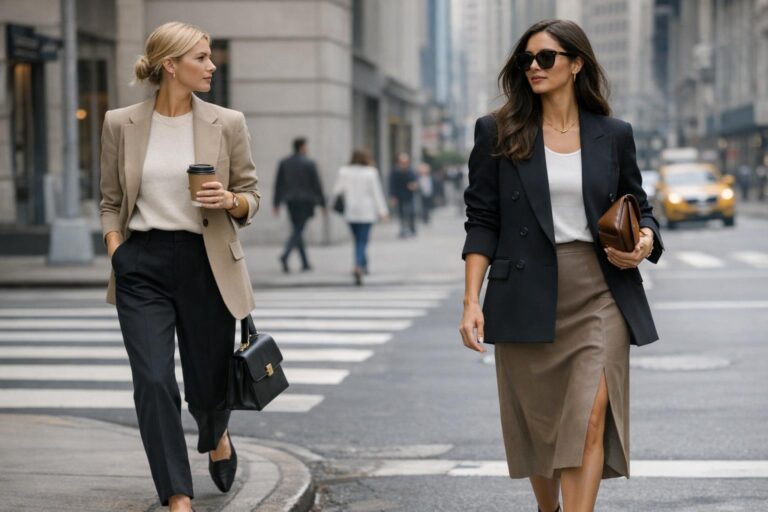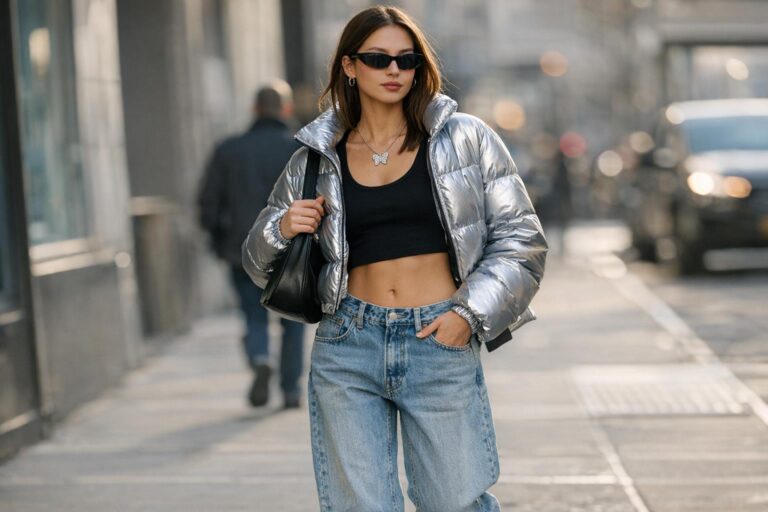
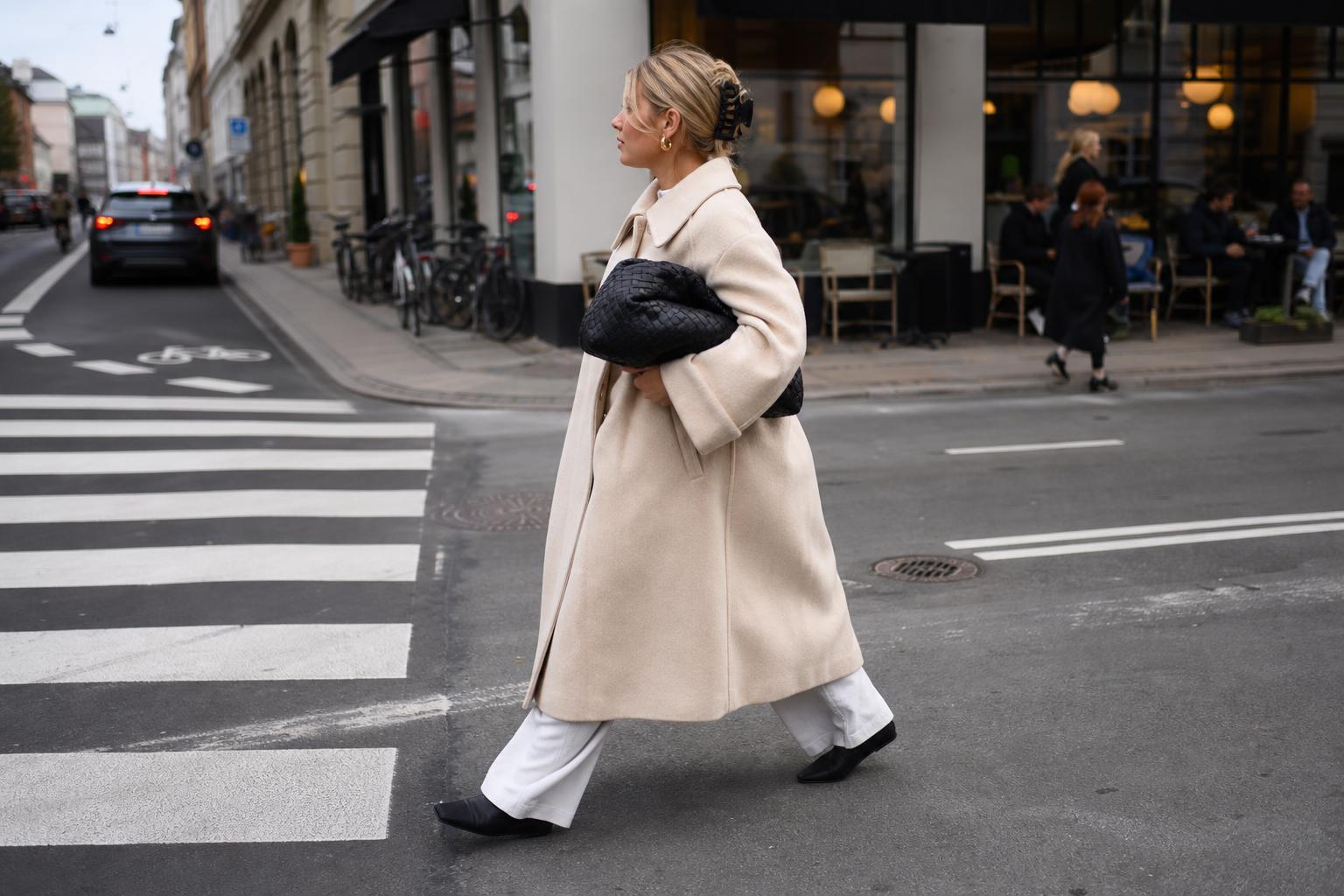
Copenhagen Street Style With a Polished, Playful Twist
On the surface, copenhagen street style can look easy to decode: neutral coats, practical shoes, oversized layers, and the occasional burst of print or color. In reality, the appeal comes from a more precise balance. Copenhagen outfits often sit between Danish minimalism and expressive fashion-week dressing, which is why they are so often discussed alongside broader Scandi street style, cycle chic, and the polished wardrobes seen at Copenhagen Fashion Week.
The confusion usually starts here: some readers think the look is purely minimal, while others associate it only with bold showgoer outfits filled with rosettes, polka dots, python print, or oversized jackets. Both views are partially right. The city’s visual identity holds these approaches together through proportion, practicality, and a strong relationship between clothing and movement.
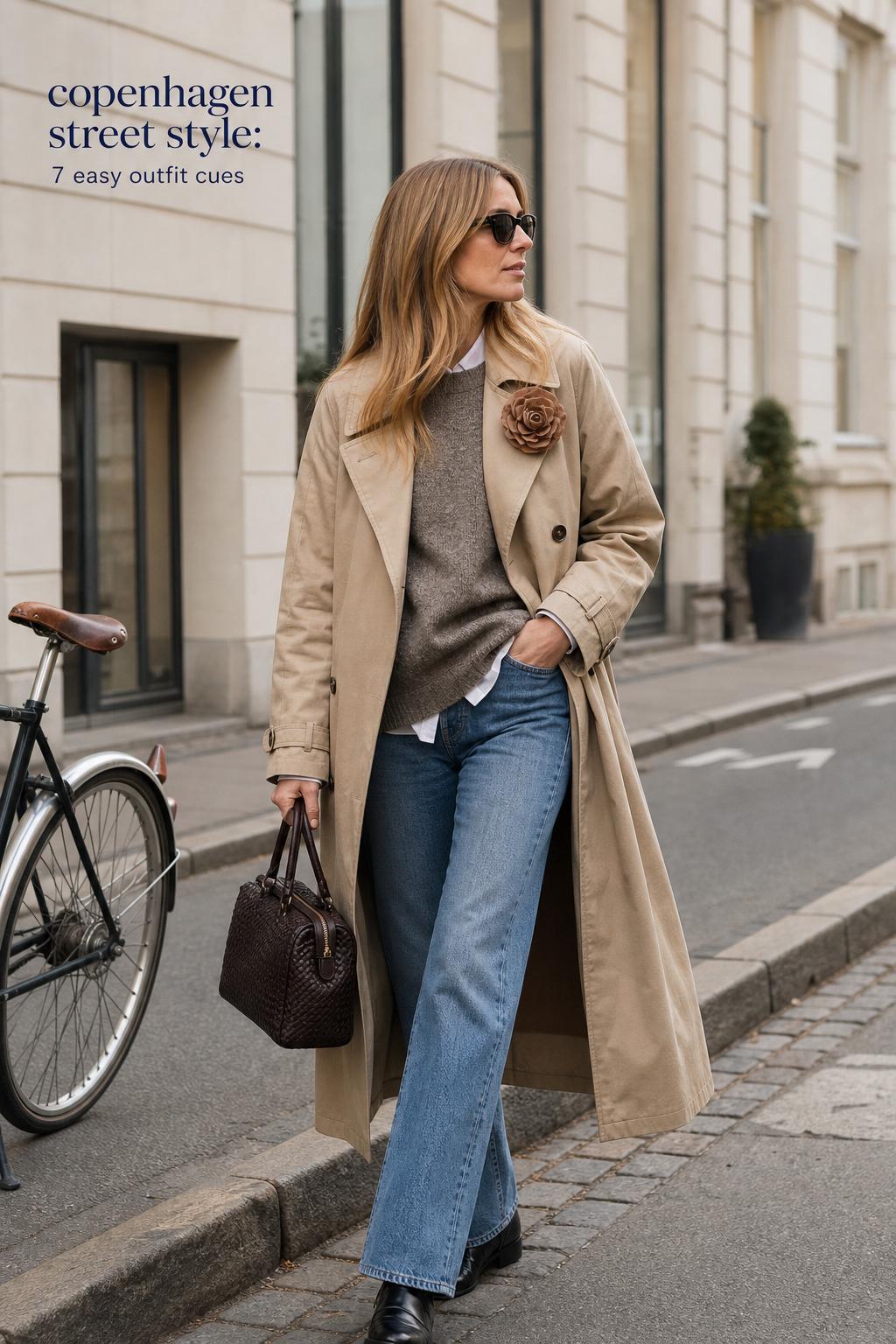
This comparison breaks down the main style approaches shaping Copenhagen’s fashion image today. It explains how neutral-led Danish minimalism differs from the more playful Copenhagen Fashion Week street style often seen in galleries, where brands such as Ganni, Mfpen, Toteme, Khaite, Massimo Dutti, Marimekko, Copenhagen Muse, Remain, Reformation, H&M, and Aesther Ekme appear across coats, bags, knitwear, denim, ballet flats, and boots. The goal is not only to identify the visual codes, but to understand when each approach works best and how they can be combined without losing coherence.
Two sides of the Copenhagen look
The most useful way to understand Copenhagen style is to compare two connected aesthetics rather than treat it as one fixed formula. The first is the quieter, more tonal wardrobe often linked to Danish minimalism: neutrals, texture mixing, clean lines, and practical footwear. The second is the event-driven version amplified during Copenhagen Fashion Week, where the city becomes a gallery of color-blocks, prints, oversized outerwear, and accessories that turn everyday dressing into visual language.
Found the dress? Keep the rest in one place.
Zarellea brings guest details, vendors, timelines, and every next step together — so your wedding plan feels as good as your look.
These styles overlap constantly. A groutfit can be sharpened with an off-white shearling coat. Brown and black can be styled together in a way that still feels restrained. A bicycle can read as infrastructure in one outfit and as a visual fashion prop in another. That fluidity is exactly what makes the Copenhagen wardrobe distinctive.
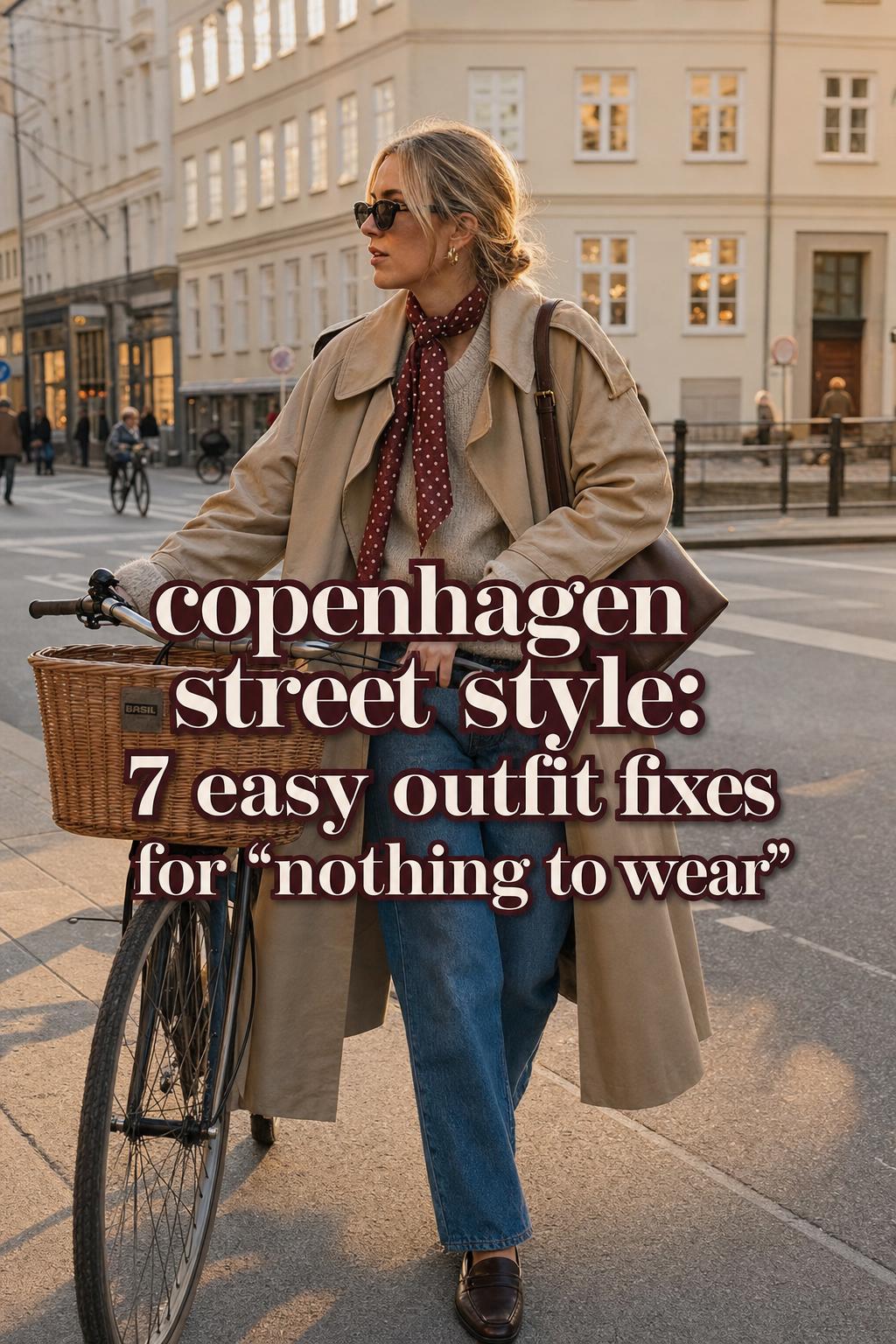
Style overview: Danish minimalism within Copenhagen dressing
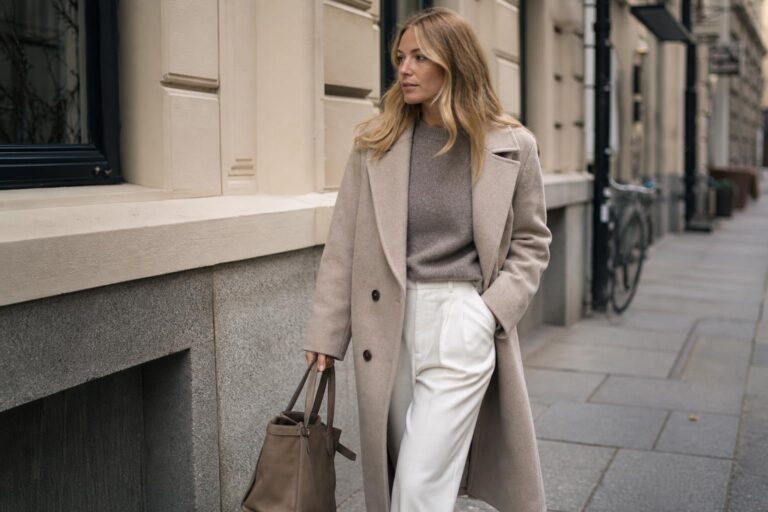
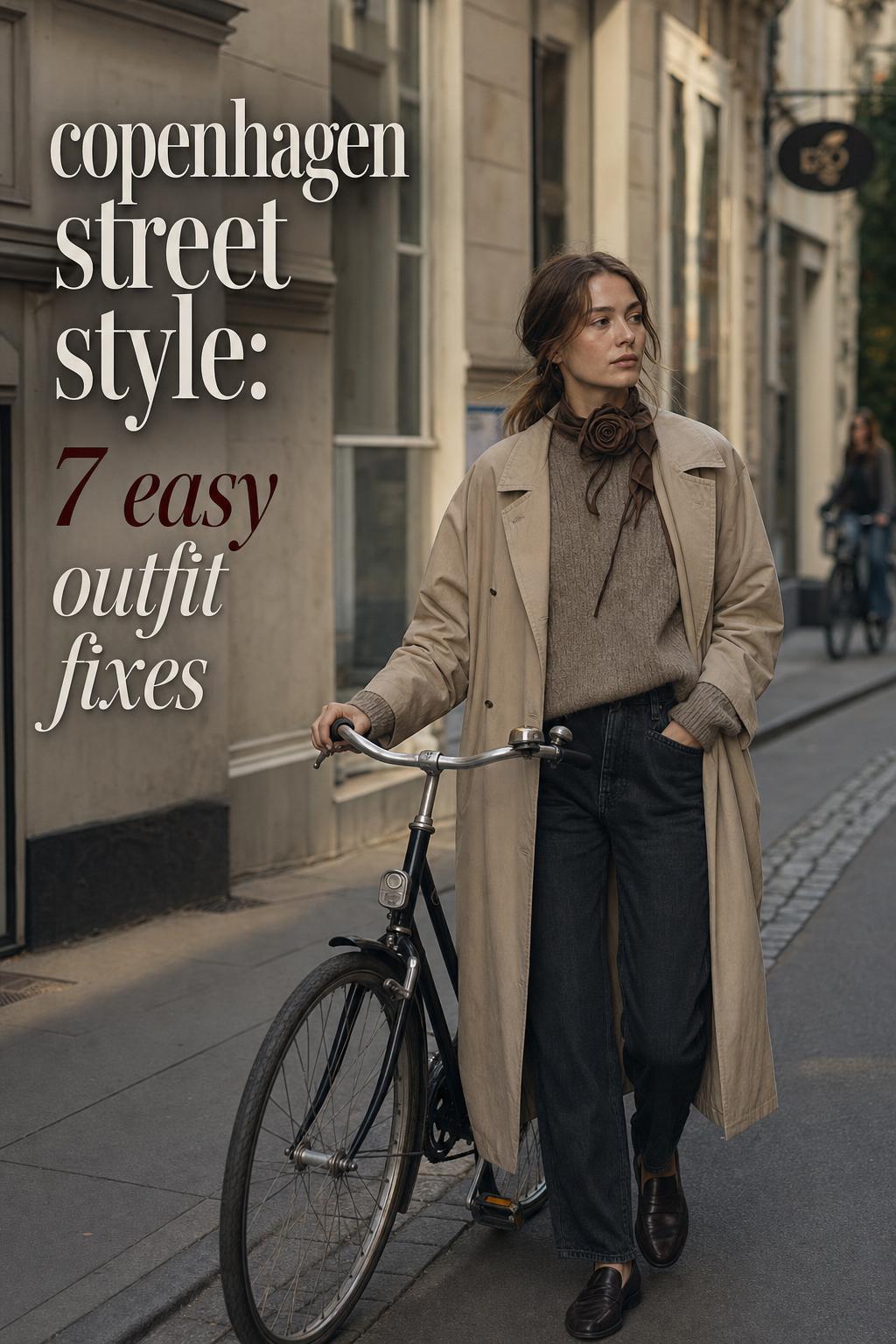
This side of the aesthetic is built around tonal balance. Neutrals dominate, especially browns, grays, creams, slate tones, and off-white. Silhouettes are relaxed without looking careless: trench coats, suede outerwear, straight denim, knitwear, tailored trousers, blazers, and bags with clean structure. The mood is composed, practical, and intentionally unfussy.
Texture does much of the work here. Wool, leather, knits, and suede create depth where bright color is limited. Footwear tends to support movement, so boots, loafers, sneakers, and ballet flats make sense within the outfit rather than feeling like afterthoughts. Labels such as Toteme, Mfpen, Khaite, Massimo Dutti, and Reformation fit naturally into this vocabulary because the garments often emphasize form, fabrication, and repeat wear.
Style overview: Copenhagen Fashion Week street style
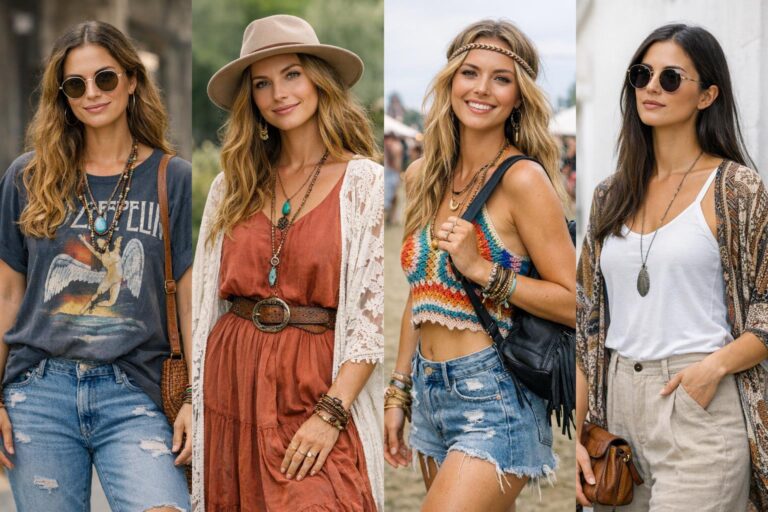
The fashion-week version of the look keeps the practical backbone but pushes visibility much further. Here, oversized jackets become statement pieces, polka dots read as directional rather than retro, roses and rosettes function as styling punctuation, and python print can operate like a neutral. Color appears in stronger blocks, prints become more layered, and accessories move forward in the outfit composition.
This is also where recognizably local cues become more obvious. Ganni often acts as a cultural anchor, while figures like Mona Tougaard and caption-level personalities such as Emma Chamberlain help illustrate how the style circulates through images. Bags, clogs, kitten heels, scarves, bandanas, hair clips, and bowler bags add personality, but the outfit still tends to feel wearable rather than theatrical.
Why these aesthetics are related, yet not identical
Both approaches share the same structural principles. They value movement, layering, and outfits that make sense in a bike-friendly city. They also rely on a disciplined sense of balance. Even the bolder Copenhagen Fashion Week looks usually have one stabilizing element: a neutral coat, an easy trouser shape, a practical shoe, or a restrained bag.
The difference is emphasis. Minimal Copenhagen dressing is about tonal refinement and material depth. Fashion-week Copenhagen is about visual contrast and image impact. One whispers through texture and silhouette; the other communicates through print, styling play, and proportion shifts. That distinction matters because many readers want to recreate the city’s style without accidentally drifting too far toward either extreme.
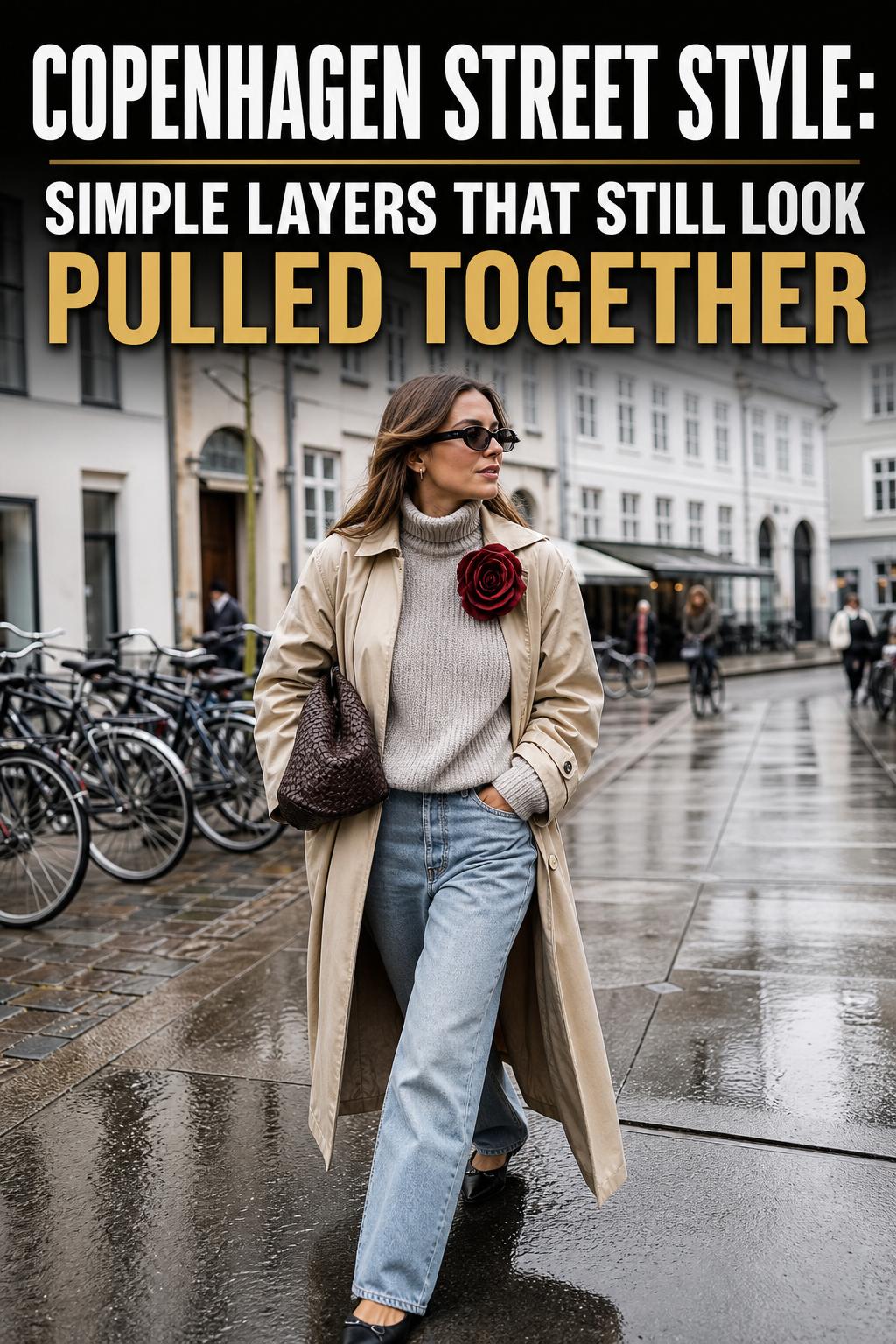
The city itself shapes the comparison
A useful way to read copenhagen street style is through place. The city is repeatedly framed as a style hub where fashion and daily life meet, and that relationship gives the wardrobe its practicality. Copenhagen is not only a backdrop for street-style photography; it informs why certain combinations succeed. Comfortable shoes, outerwear with real function, and layers that can move through changing conditions all make visual sense here.
This becomes even clearer when thinking about neighborhoods such as Nørrebro, Vesterbro, and Østerbro. These districts are often treated as fashion micro-hubs in discussions of the city’s style identity. In comparison terms, they help explain how one city can support both eclectic layering and polished simplicity. Nørrebro aligns easily with expressive texture and mixed styling cues. Vesterbro suggests a sharper minimalist edge. Østerbro fits the cleaner, more polished end of the spectrum.
The neighborhood lens also clarifies why Copenhagen style never reads as one-note. A neutral trench, denim, and a structured bag can feel entirely at home in one district, while a look built around florals, checks, cowboy boots, or a statement jacket feels equally plausible elsewhere. The city’s style reputation depends on that range.
Key differences that separate the two main Copenhagen aesthetics
Silhouette and structure
Minimal Copenhagen dressing typically favors controlled volume. A coat may be oversized, but it is usually paired with a steady base layer such as straight trousers, slim knitwear, or clean denim. The silhouette feels edited. In Copenhagen Fashion Week street style, the same oversized coat might be pushed further with amplified shoulders, wider trousers, or layered pieces that create more visual motion.
The distinction is subtle but important. One approach uses volume to create calm proportion play. The other uses volume to attract the eye. That is why an oversized jacket can look understated in one outfit and statement-led in another, even if the garment category is identical.
Color palette and print language
The minimal side of Copenhagen style relies on browns, black, gray, cream, slate, and off-white, often combined in tonal layers. A brown-and-black outfit, for example, works because the contrast stays muted while the texture does the expressive work. A groutfit gains dimension through material contrast rather than bright color intervention.
The more fashion-week-facing style opens the palette. Color-block dressing, roses in multiple shades, checks, florals, and polka dots all appear more freely. Python print is especially revealing as a styling signal because it shows how Copenhagen dressers handle boldness: the print is often treated as if it were a neutral, grounding the look instead of overwhelming it.
Formality level
Neither version of Copenhagen dressing is overtly formal in the traditional sense. However, the minimal wardrobe reads more polished in day-to-day environments because it is easier to integrate into workwear, travel dressing, and repeat styling. The fashion-week version is less about formality and more about fashion visibility. It is still wearable, but it carries a stronger image-conscious quality.
This is why a Toteme-inspired neutral outfit can move effortlessly from coffee meeting to office setting, while a look built around rosettes, cowboy boots, and a bright oversized jacket communicates a more event-facing intent, even if the individual pieces remain practical.
Wardrobe building philosophy
Minimal Copenhagen style works like a capsule: repeatable coats, knitwear, denim, bags, and footwear chosen for versatility. The visual interest comes from tonal layering, shape refinement, and durable textures. The fashion-week side still uses these foundations, but introduces impact pieces more aggressively. A bowler bag, kitten heel, polka-dot layer, or offbeat print becomes the visual anchor rather than a supporting accent.
The practical takeaway is clear. If the wardrobe goal is long-term flexibility, start with the minimal framework. If the goal is stronger visual identity, build from that base and add one or two expressive elements that shift the mood.
Visual style breakdown in everyday outfits
Layering approach
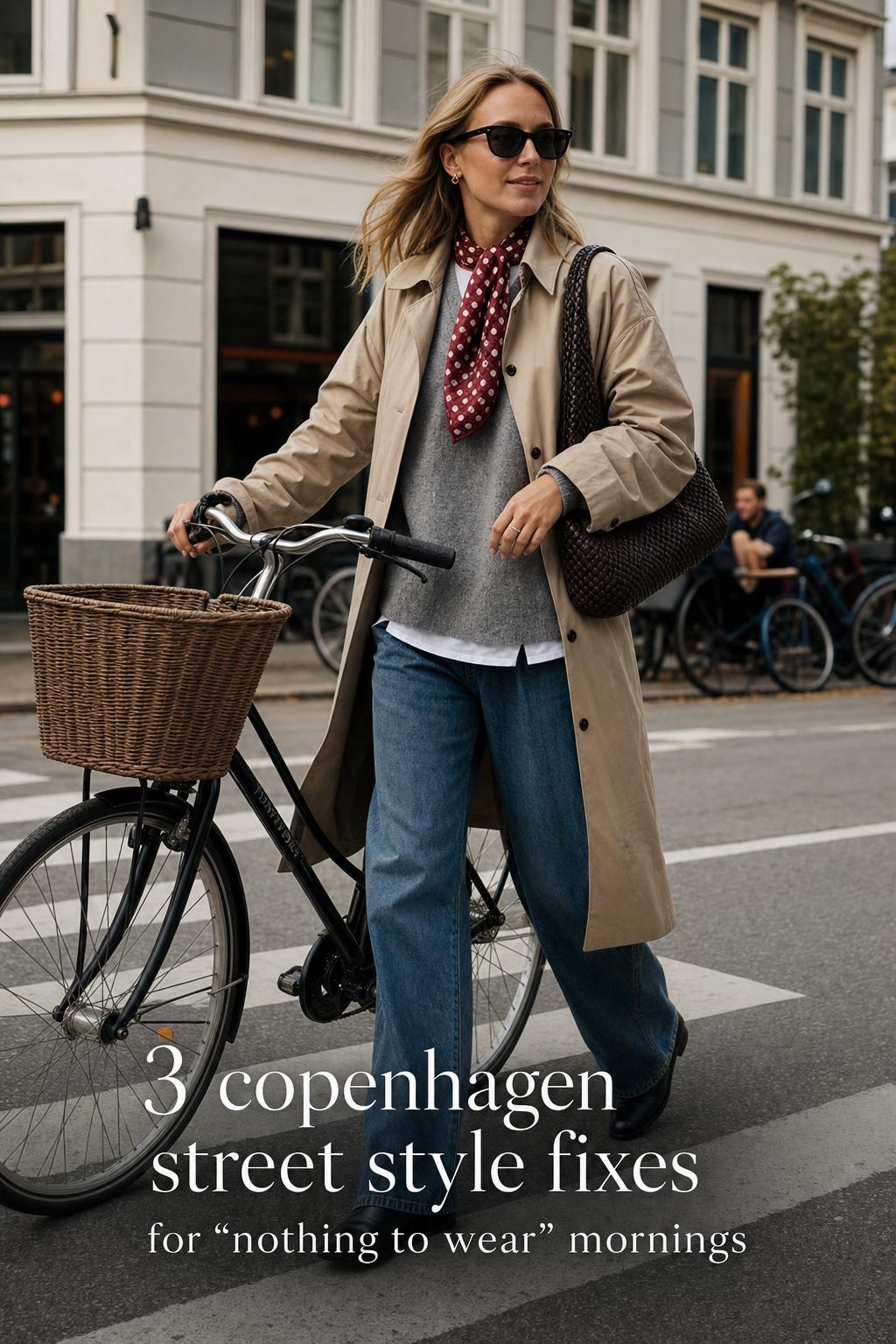
In the quieter version of copenhagen street style, layering is usually tonal and close in value. A cream knit under a brown coat with gray trousers creates depth without abrupt contrast. The eye moves across the outfit through texture rather than through obvious color breaks. This is why suede trenches, wool coats, and soft knits recur so often in Copenhagen imagery.
In the more expressive version, layering becomes a styling event. Denim and leather may be juxtaposed more clearly. A sheer tank can sit under utilitarian cargos. A neutral coat might frame a printed base. The composition is still intelligent, but the contrasts are easier to spot at a distance, which helps explain why these looks photograph so well during Copenhagen Fashion Week SS26, FW25, and spring 2025 coverage.
Garment proportions
Everyday Copenhagen minimalism tends to maintain a stable line: long coat, straight trouser, practical shoe, compact or structured bag. The outfit has room, but the width is controlled. In contrast, fashion-week styling often exaggerates one dimension. The jacket gets larger, the trousers get wider, the boots gain more visual weight, or the top introduces a sharper styling interruption such as a rosette or print panel.
This proportion play is central to Copenhagen dressing because it keeps even simple outfits from looking flat. The best examples do not rely on many pieces; they rely on one shape doing the visual work.
Accessories and visual anchors
Accessories are one of the clearest ways to tell which side of the Copenhagen aesthetic an outfit belongs to. In the minimal camp, the bag often stays sculptural and quiet, with labels such as Aesther Ekme or Khaite fitting the mood. Footwear is functional first: loafers, ballet flats, boots, or sneakers that support movement and keep the silhouette grounded.
In the bolder street-style interpretation, accessories become communicative. Scarves, belts, sunglasses, clogs, kitten heels, hair clips, and bandanas add direction. The bicycle itself can become part of the image language. This is not accidental styling. It reflects how the city’s cycling culture intersects with fashion photography and turns practical movement into an aesthetic cue.
Footwear logic
Footwear reveals the practicality behind both styles. Boots and sneakers support weather changes and city movement. Ballet flats and loafers soften heavier coats or oversized tailoring. Cowboy boots, when they appear, shift the outfit toward the more playful side of Copenhagen dressing, especially when paired with checks, florals, or oversized outerwear.
The common thread is that shoes rarely feel disconnected from the outfit’s purpose. Even when the styling is image-led, the footwear usually retains enough comfort logic to remain plausible beyond the photo.
Seasonal context changes the comparison
Seasonality matters because many of the strongest Copenhagen references come from fashion-week cycles such as spring 2025, FW25, and SS26. Across these periods, the core visual language remains stable, but palette and fabrication shift. That means the difference between minimal and expressive Copenhagen style is not static; it changes with climate and layering needs.
Spring and summer: lighter contrast, sharper accents
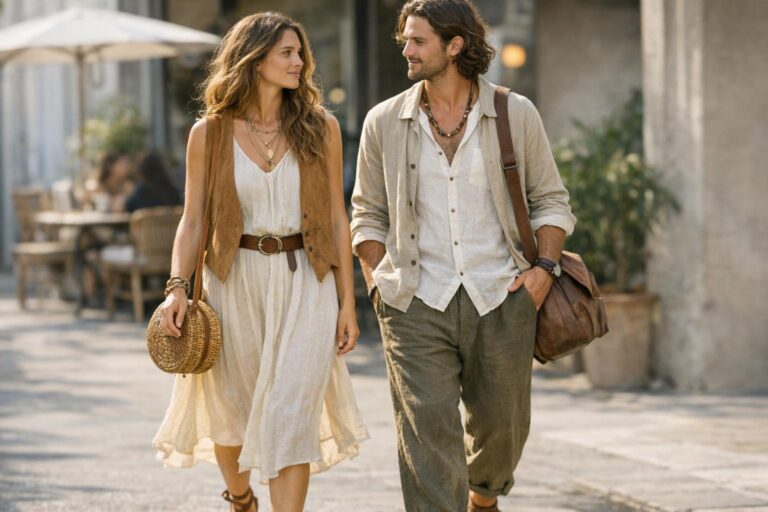
In warmer months, Copenhagen style tends to lean into lighter neutrals, white jeans, easier denim, sheer tanks, lighter trench coats, and accessories that carry more of the statement function. Polka dots, bowler bags, and kitten heels feel more visible because the outfit framework is less bulky. The minimal version remains tonal, while the fashion-week version often uses print or accessory contrast to create interest.
This is also where a bicycle-adjacent look becomes especially legible. A crisp jacket, practical flat, and compact bag can feel polished without becoming rigid. The line between city dressing and street-style dressing gets thinner in spring because the pieces look naturally mobile.
Fall and winter: texture becomes the central difference
As temperatures drop, wool, leather, heavy knits, and suede move to the front. Here, minimal Copenhagen dressing becomes especially strong because texture-rich neutrals already suit the season. Browns with black, slate with cream, and gray-on-gray combinations carry depth without needing much ornament.
The expressive version still works, but often through statement outerwear and bold accessories rather than through lightweight pattern mixing. An off-white shearling coat over a gray base, or python-printed footwear within a neutral outfit, can create enough tension to feel fashion-forward while staying seasonally coherent.
Brands and figures that illustrate the contrast
Brand references matter in Copenhagen style because they often clarify the outfit logic. Ganni sits near the more playful, image-visible edge of the city’s fashion identity. It helps explain why colorful sets, prints, and oversized styling still feel culturally grounded in Copenhagen rather than imported from another street-style scene. Mfpen often supports the more relaxed, textural, and neutral side of the wardrobe. Toteme, Massimo Dutti, Khaite, and Reformation fit naturally into the refined end of the spectrum through clean shapes and strong outerwear or accessories.
Marimekko introduces another useful point of comparison because bold prints and color can still be integrated without losing structure. Copenhagen Muse, Remain, and H&M appear in look captions and compilations that show how the city’s style is not dependent on one price point or one type of wardrobe. The through-line is styling intelligence rather than exclusivity.
People also help frame the distinction. Mona Tougaard is often used to anchor contemporary Copenhagen Fashion Week street style because she embodies the polished-but-directional balance the city is known for. Emma Chamberlain appears in caption-level fashion-week imagery that reinforces how globally visible the Copenhagen look has become. Lois Opoku helps illustrate the influencer-side interpretation of layering, color, and silhouette. These figures do not define the style alone, but they help make its range visible.
Outfit comparison: how the same wardrobe situation changes by style
Casual city outfit
The minimal Copenhagen version starts with a neutral coat, straight denim, a knit, and practical flats or sneakers. The bag is structured and compact, and the palette is likely cream, gray, brown, or black. The success of the outfit comes from tonal continuity and clean silhouette balance.
The fashion-week version of the same casual formula keeps the coat and denim but adds a stronger visual cue: a polka-dot layer, a python-print shoe, an oversized jacket shape, or a more sculptural bag. The difference is not the wardrobe category but the outfit composition. One prioritizes calm; the other introduces a deliberate focal point.
Cold-weather layering
In a minimal interpretation, a groutfit can be elevated with a shearling coat, suede trench, or textured wool layer. The outfit remains monochromatic or near-monochromatic, which allows the materials to create richness. Boots finish the look without competing for attention.
In a more expressive interpretation, the same cold-weather base might be interrupted by a strong accessory, a floral or rosette detail, or boots that shift the mood toward rodeo-coded styling. The result feels more editorial, but the outfit still works because the heavy outerwear keeps the composition grounded.
Work-adjacent dressing
For office or meeting contexts, Copenhagen minimalism is easier to apply. A blazer, tailored trouser, knitwear, and loafers or ballet flats create a polished line that feels modern without trying too hard. Browns with black or cream with gray are especially effective because they look intentional and refined.
The fashion-week version of workwear may still include tailoring, but it is more likely to introduce a surprising accessory or proportion shift. That can work in creative environments, but it is less adaptable in conservative settings. The visual message becomes more fashion-forward than purely professional.
Statement outfit for an event day
If the goal is visibility, the event-facing side of Copenhagen style has the advantage. A colorful set, oversized outerwear, cowboy boots, check print, or roses can create instant presence. A bowler bag or bandana can sharpen the styling further. The look reads clearly in photographs and carries more personality from a distance.
The minimal version can still work for an event, but it relies on precision rather than drama. The statement comes from immaculate texture contrast, a strong coat shape, or a particularly clean palette. It is powerful in a quieter way, but less likely to dominate an image-heavy environment.
Tips for recreating the look without losing balance
The easiest mistake with Copenhagen style is assuming that every interesting look needs multiple standout elements. In practice, the strongest outfits usually have one lead idea and one stabilizer. A printed shoe works because the rest of the outfit is neutral. A colorful jacket succeeds because the trousers and bag remain controlled. A tonal outfit avoids looking flat because the textures are varied.
- Use one visual anchor per outfit, such as a suede trench, python-print flat, oversized blazer, or polka-dot layer.
- Keep the base wardrobe functional: coats, denim, knitwear, tailored trousers, boots, loafers, ballet flats, and an everyday bag.
- Mix textures before adding more colors. Wool, leather, suede, and knit create depth faster than an extra print.
- If wearing oversized outerwear, keep at least one other element controlled so the silhouette does not lose shape.
- Treat strong accessories as punctuation, not as the entire outfit strategy.
Another useful principle is to think in movement. Copenhagen style is closely tied to a cycling-friendly environment, so the outfit should still make practical sense. Even image-led looks benefit from shoes that support walking, bags that do not overwhelm the frame, and outerwear that can layer effectively.
Where the bicycle changes the styling equation
One of the most specific distinctions in Copenhagen style is the role of the bicycle. In many fashion capitals, a bicycle in street-style photography would read as a prop first. In Copenhagen, it can operate as both reality and visual code. That dual role influences the outfit architecture. Clothes need to move, sit, and layer well, which helps explain the city’s loyalty to practical footwear, easy coats, and non-fragile wardrobe foundations.
This is also why cycle chic is discussed so often alongside Danish street style. The term is useful not because every Copenhagen outfit is bike-focused, but because the city’s dress logic tends to resist pieces that look detached from daily use. Even a fashion-week look with roses, clogs, or a statement jacket often retains enough functionality to feel grounded in the city rather than staged outside it.
A district-led reading of the style spectrum
Nørrebro and eclectic layering
Nørrebro is the easiest reference point for understanding the expressive side of Copenhagen dressing. Here, mixed textures, visible accessories, color interruptions, and proportion play make sense. The outfit may combine utilitarian cargos with a sheer tank, or blend prints with an oversized jacket. The success comes from intentional contrast rather than polished restraint.
Vesterbro and minimalist edge
Vesterbro aligns more closely with clean lines, structured bags, strong outerwear, and the kind of tonal layering that defines the quieter side of copenhagen street style. A brown coat with black trousers, or gray layered with cream, feels especially at home in this mode. The outfit’s strength comes from editing, not ornament.
Østerbro and polished simplicity
Østerbro offers a useful midpoint. The wardrobe remains refined and practical, but there is room for a statement flat, a sharper bag, or a subtle print. This is where many readers may find the most wearable version of the Copenhagen aesthetic: polished enough for everyday dressing, but not so minimal that personality disappears.
When to choose each approach in a real wardrobe
The minimal Copenhagen framework is the stronger choice for repeat wear, work settings, travel, and wardrobes built around versatility. It performs well across seasons because its strength lies in proportion and texture rather than trend-specific details. If a reader wants a practical route into Danish style, this is the clearer starting point.
The more expressive Copenhagen Fashion Week approach is ideal for social events, creative workplaces, content-heavy days, and moments when visual impact matters. It also suits readers who already have a strong neutral wardrobe and want to introduce controlled disruption through print, color, or statement accessories.
The most realistic answer for many wardrobes is not choosing one over the other, but using each according to context. Neutral outerwear, denim, knitwear, and practical shoes can form the daily base. Then, for weekends, events, or fashion-oriented settings, a Ganni-style print, python detail, rosette accent, oversized jacket, or bowler bag can shift the outfit into a more visible register.
Common mistakes when trying to dress in a Copenhagen way
The first mistake is flattening the style into generic minimalism. A beige coat and simple sneakers are not enough on their own. Copenhagen dressing depends on silhouette and texture intelligence. Without that, the outfit can look anonymous rather than intentional.
The second mistake is going too far in the opposite direction. Layering prints, oversized shapes, and strong accessories all at once can erase the practicality that keeps Copenhagen style distinctive. The city’s strongest street-style images still show discipline. Even the playful looks have a center of gravity.
The third mistake is ignoring season and fabric. A tonal outfit only works if the materials create enough contrast. A fashion-week-inspired look only works if the statement element is supported by the rest of the wardrobe. In both cases, fabric behavior matters as much as color.
Final style reading: the real signature of Copenhagen
The core distinction is not minimal versus maximal in any absolute sense. Copenhagen style is better understood as practical structure versus expressive styling, with both sides sharing the same foundation of movement, layering, and visual clarity. The city’s fashion identity holds neutral palettes, texture mixing, oversized outerwear, prints, and accessories in the same conversation because all of them are filtered through proportion and wearability.
That is also how to identify the look in real life. If the outfit is built on tonal control, material depth, and easy functionality, it sits closer to the minimalist side of Copenhagen dressing. If it uses the same practical framework but introduces polka dots, roses, python print, color-blocks, cowboy boots, or stronger accessories, it moves toward Copenhagen Fashion Week street style. The most convincing wardrobes borrow from both, combining Danish restraint with enough visual personality to keep the outfit alive.
FAQ
What is copenhagen street style best known for?
It is best known for combining practicality with fashion awareness. The most recognizable elements are neutral palettes, texture mixing, oversized outerwear, comfortable footwear, and a styling approach that feels wearable even when it includes bold prints or statement accessories.
Is copenhagen street style the same as Scandinavian minimalism?
No. Scandinavian minimalism is one important part of the Copenhagen look, especially in tonal dressing and clean silhouettes, but Copenhagen Fashion Week street style also includes color-blocking, polka dots, florals, rosettes, and more visible accessories that move beyond strict minimalism.
Which brands are most associated with the Copenhagen look?
Ganni is one of the clearest cultural anchors, especially for the more expressive side of the style. Other frequently relevant names include Mfpen, Toteme, Khaite, Massimo Dutti, Reformation, Marimekko, Copenhagen Muse, Remain, H&M, and Aesther Ekme, depending on whether the outfit leans minimal or fashion-week focused.
How do I recreate Copenhagen style without looking overdressed?
Start with a practical base such as a strong coat, denim or tailored trousers, knitwear, and comfortable shoes. Then add only one clear style signal, like a sculptural bag, a printed flat, or an oversized jacket. The Copenhagen effect comes from balance, not from stacking multiple statement pieces at once.
Why are bicycles mentioned so often in discussions of Copenhagen fashion?
Bicycles matter because they reflect both the city’s daily life and its visual fashion identity. They help explain why practical shoes, functional outerwear, and movement-friendly styling feel so central to the Copenhagen wardrobe, even in highly photographed fashion-week settings.
What colors define Copenhagen dressing right now?
Neutrals remain central, especially browns, black, gray, cream, slate, and off-white. Alongside those quieter tones, contemporary Copenhagen styling also makes room for stronger print language and accents such as polka dots, florals, rosettes, and python print.
Are Copenhagen Fashion Week outfits wearable in everyday life?
Many of them are, because they usually begin with practical foundations like coats, denim, boots, knitwear, and functional bags. What makes them feel fashion-forward is often one amplified element, such as an oversized silhouette, a statement accessory, or a bold print, rather than an entirely impractical outfit.
Which shoes work best for a Copenhagen-inspired wardrobe?
Boots, loafers, sneakers, and ballet flats all fit naturally because they support the city’s movement-focused style logic. Clogs, kitten heels, and cowboy boots can also work when the outfit leans more toward the expressive Copenhagen Fashion Week side.
Can I mix minimal pieces with bolder Copenhagen trends?
Yes, and that is often the most effective approach. A neutral coat, tailored trouser, or simple knit provides stability, while one expressive detail such as a Ganni-style print, python accessory, or rosette accent gives the outfit a more distinctly Copenhagen finish.